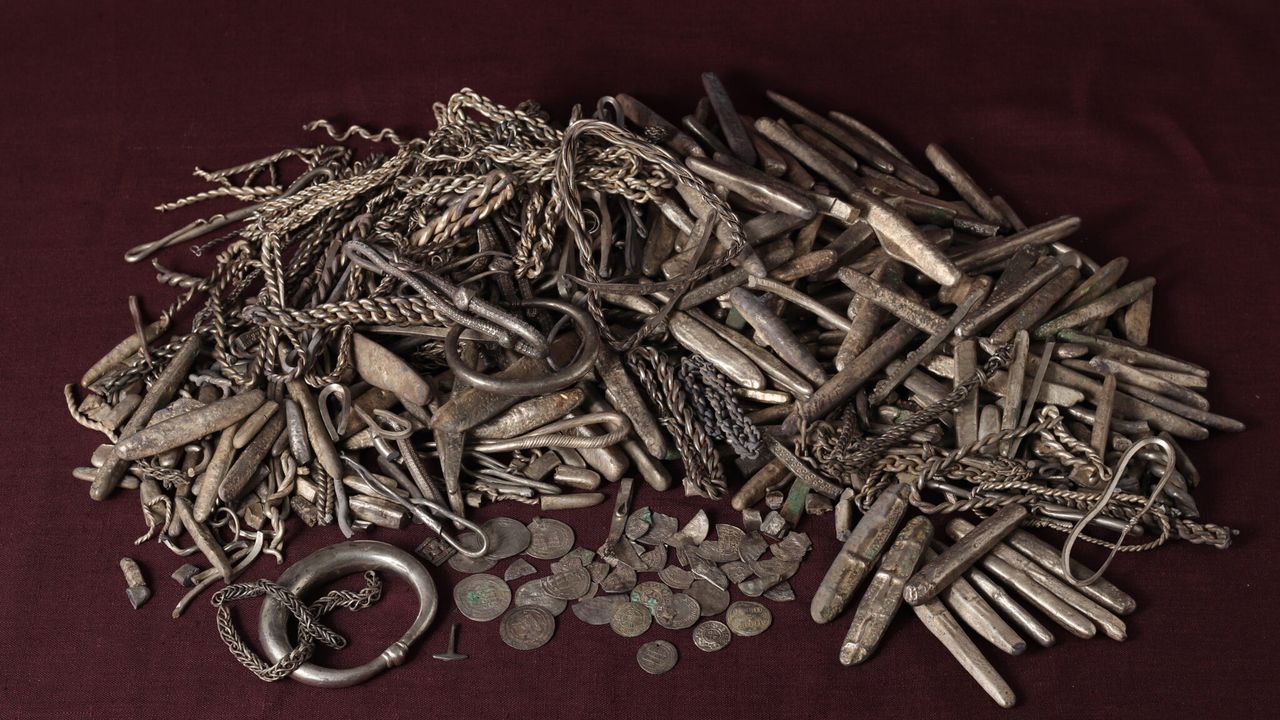
A homeowner preparing to build a terrace in the municipality of Rebild, Denmark, has discovered the country’s largest known Viking Age silver hoard. The find, uncovered this past spring, contains more than 40 pounds (18.5 kilograms) of silver and approximately 700 objects dating to roughly 1,100 years ago.
According to Live Science, the discovery began when the homeowner struck something that produced an unusual sound while removing grass, stones and gravel. The hoard included silver bars, jewelry, 47 complete coins and coin fragments, as well as a small Thor’s hammer. Such hammers have often been interpreted as protective objects and possible signs of belief in the Norse gods, although the source does not establish the specific meaning of this example.
Around 320 objects were packed inside a clay vessel, while the remaining pieces were found in the surrounding soil. The hoard is nearly three times larger than the previous largest Viking Age silver hoard known from Denmark, according to a translated statement cited by the report.
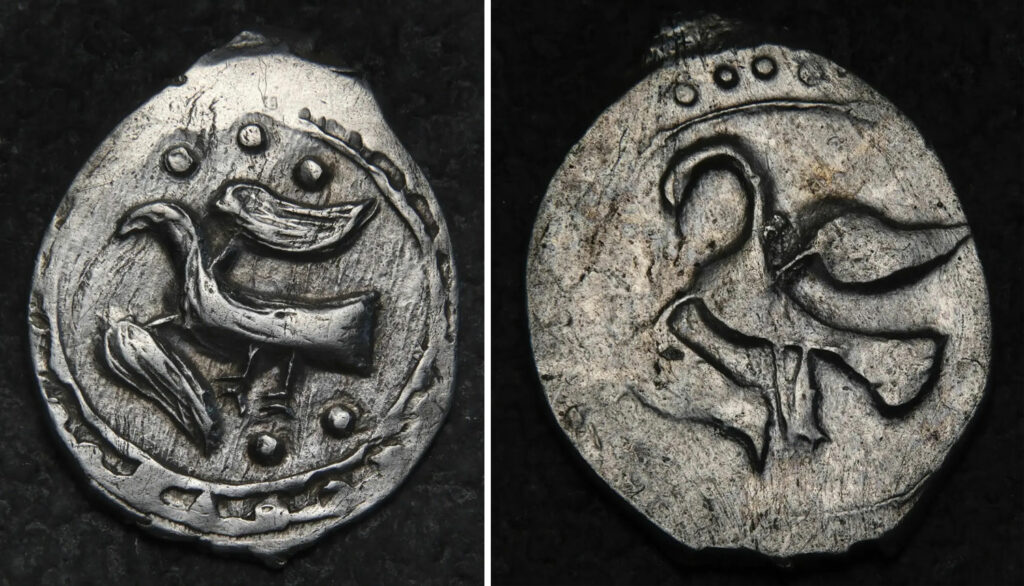
The coins provide an approximate date. Two Anglo-Saxon silver pennies were minted during the reign of King Edward the Elder, who ruled from 899 to 924, suggesting that the collection was buried sometime in the 10th century. The hoard also contains Islamic coins, pointing to connections between Viking Age Denmark, other parts of Europe and distant eastern regions.
One silver bar bears a runic inscription that might read “hutu.” Researchers say this could be a personal name or an owner’s mark. The objects also appear to have been organized according to weight. Silver bars, along with some bracelets and fragments, can be grouped into particular weight categories, indicating that the collection was a structured store of wealth rather than a random accumulation.
Torben Sarauw, cultural heritage manager at the North Jutland Museums, compared the find to a Viking Age safe and said it demonstrates how silver functioned both as wealth and as a means of payment.
The reason the hoard was buried remains unknown. It could have been hidden near a settlement, beside a road that no longer exists, or in a secluded location. Archaeological investigations that might clarify its context are considered impossible because the discovery area is now developed. The hoard is being submitted to the National Museum of Denmark for assessment.