Archaeology.Today
Field Report

Ancient DNA Points to Cultural Spread of Western Farming in Gansu

Genomic data from 149 ancient individuals indicate that western-derived crops and livestock reached Gansu without a large influx of people from western Eurasia or Central Asia. The study also reveals connected kinship networks and complex burial practices at the Mogou cemetery.

September 3, 2026
1 Source
Mogou
Ancient DNA Points to Cultural Spread of Western Farming in Gansu
The Story

Western-derived agriculture appears to have reached ancient Gansu through cultural exchange rather than a large-scale migration of farmers, according to a study of ancient DNA from 149 individuals. The findings cover a period from about 4,700 to 3,000 years ago, when crops and livestock first domesticated in western Eurasia were introduced to the region.

The study, published in Cell on September 3, was led by Fu Qiaomei of the Institute of Vertebrate Paleontology and Paleoanthropology at the Chinese Academy of Sciences, in collaboration with multiple institutions. Researchers examined genomic evidence from Gansu, a region described as a crossroads for exchanges across Eurasia.

Although western-derived crops or livestock were adopted at nine of the 11 sites examined, the ancient individuals showed no detectable genetic influence from western Eurasia or Central Asia. Their principal genetic ancestries were linked instead to populations associated with the Yellow River basin, the southeastern Mongolian Plateau and the Tibetan Plateau. A small number of genetic outliers indicated contacts with nearby and more distant northern regions, including the Cis-Baikal area.

The researchers suggest that farming practices and domesticates may have spread through the Inner Asian Mountain Corridor, exchange networks or intermediary populations across the Mongolian Steppe. These possibilities remain interpretations of the genetic and archaeological evidence rather than evidence of a single confirmed route.

The study also examined social and burial practices at Mogou, a large cemetery dating from about 3,600 to 3,200 years ago. Kinship and identity-by-descent analyses showed that many individuals belonged to a broadly connected biological network that continued through the transition from the Qijia to the Siwa archaeological cultures.

Evidence pointed to both endogamy and some degree of exogamy at Mogou. The researchers found no significant difference between males and females in relatedness patterns, suggesting that the community did not strictly follow either patrilocal or matrilocal residence.

Burial arrangements were not determined solely by biological kinship. Individuals who were genetic outliers were more likely to be buried in settings interpreted archaeologically as lower status, while genetic relatedness did not strongly correspond to distance between burials. No first- or second-degree relatives were found buried together in multiple-burial tombs, and some co-buried individuals may have differed in social status or been interred at different times. The results indicate that social relationships, identity and the repeated use of tombs all influenced burial practices at Mogou.

Reference Desk

Sources & Further Reading

Continue Exploring

Related Archaeology

More stories
Ancient DNA Identifies the Upton Lovell Shaman as a Woman
01
Bioarchaeology
Score 95

Ancient DNA Identifies the Upton Lovell Shaman as a Woman

Ancient DNA analysis by the Francis Crick Institute has shown that the 4,000-year-old individual known as the Upton Lovell Shaman was female, challenging a long-standing assumption based largely on the person’s presumed status. The finding illustrates how genetic research is reshaping interpretations of the ancient past.

Read story
Medieval Manuscripts Preserve DNA Evidence of Sheeppox History
02
Discoveries
Score 55

Medieval Manuscripts Preserve DNA Evidence of Sheeppox History

DNA recovered from parchment, including the York Gospels and other medieval manuscripts, has helped researchers trace sheeppox virus through at least 3,500 years. Combined with evidence from Bronze Age sheep teeth, the study suggests the pathogen’s major lineages diverged during the era of animal domestication and sheep movement into Europe.

Read story
Ancient DNA Identifies Cacao Consumption at Georgia’s Etowah Site
03
Bioarchaeology
Score 40

Ancient DNA Identifies Cacao Consumption at Georgia’s Etowah Site

DNA recovered from three pottery fragments indicates that people at the Etowah Mounds consumed cacao during the 11th and 12th centuries. The finding provides evidence of cacao use east of the Mississippi River and points to connections with regions where the tropical plant grew.

Read story
Study Warns of Health Risks in Trade of Mummified Human Remains
04
Bioarchaeology
Score 20

Study Warns of Health Risks in Trade of Mummified Human Remains

A peer-reviewed study examining 128 online listings found mummified human remains, including heads, hands and feet, offered through social media, e-commerce sites and auction houses. Researchers warn that deterioration, dormant microorganisms and toxic preservation materials could endanger buyers, sellers and workers handling shipments.

Read story
LiDAR Survey Reveals More Than 20,000 Amazonian Earthworks
05
Archaeological Science
Score 20

LiDAR Survey Reveals More Than 20,000 Amazonian Earthworks

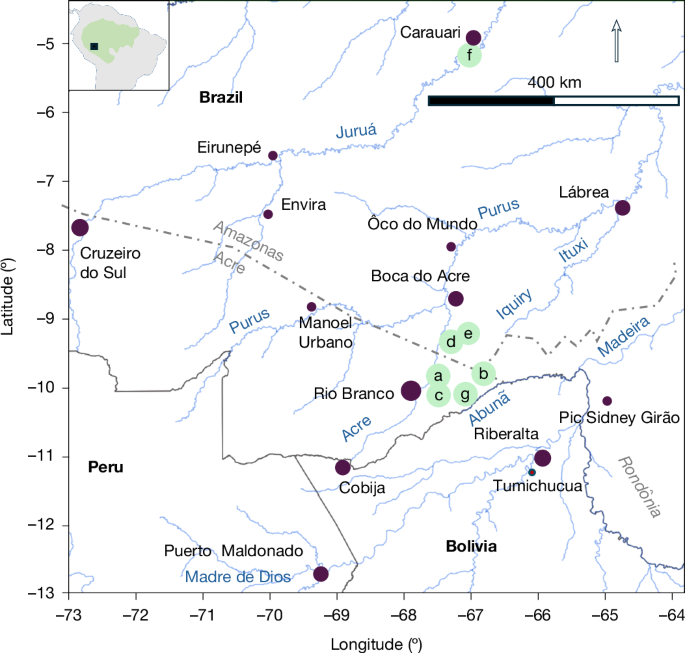
A study using canopy-penetrating LiDAR has expanded the known distribution of precolonial earthworks in southwestern Amazonia. The researchers tentatively estimate that the region’s population reached between 1.25 million and 3 million people around AD 100–300, although the estimate depends on evidence from a limited survey area.

Read story
Skeleton Found Inside Giant Roman Jar at Bulgarian Fortress
06
Bioarchaeology
Score 20

Skeleton Found Inside Giant Roman Jar at Bulgarian Fortress

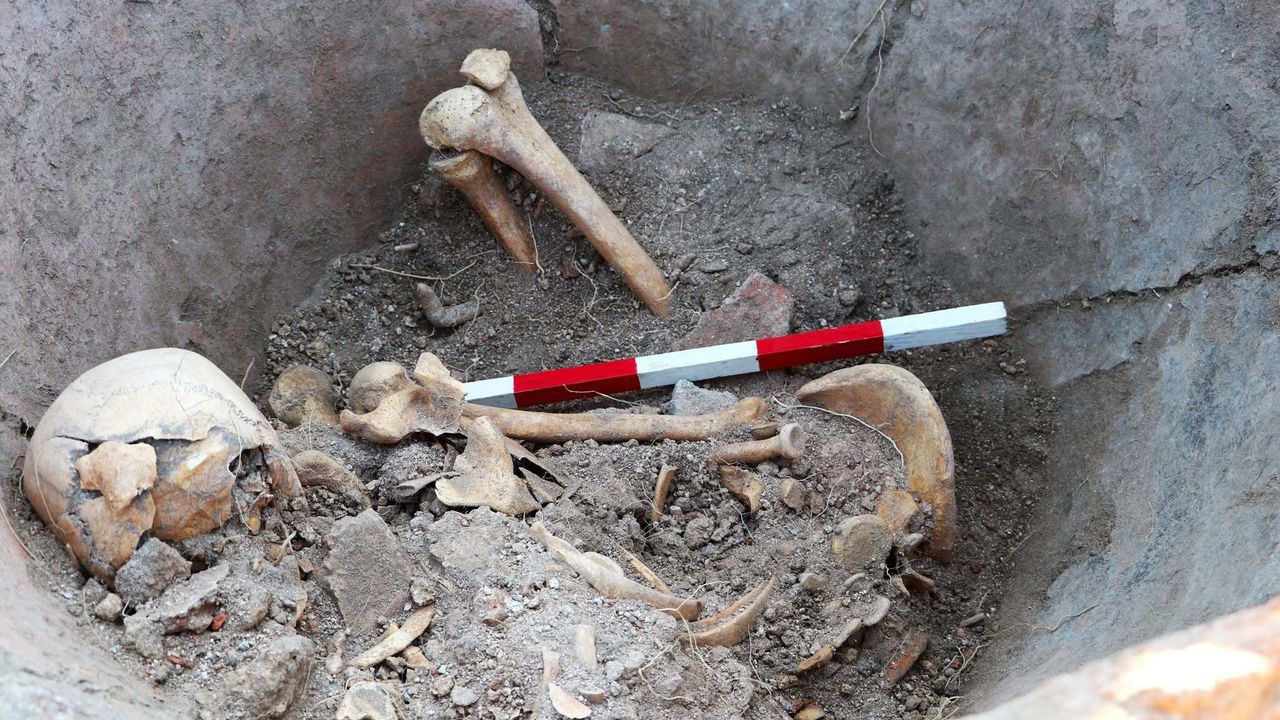
Archaeologists excavating the Roman colony of Deultum in Bulgaria found a human skeleton inside a large storage jar, or dolium. The remains may belong to a young man who sought shelter during an attack and fire around A.D. 400, but researchers have not yet established how he died.

Read story