Archaeology.Today
Field Report

Old Kingdom Official’s Tomb and Burial Shafts Found at Saqqara

An intact tomb belonging to the high-ranking official Sekhentio-Ptah has been uncovered in Saqqara’s Bubasteion Necropolis, along with interconnected burial shafts. The discovery includes inscribed funerary elements, alabaster ritual objects, human remains and more than 100 faience ushabti figurines.

September 2, 2026
1 Source
Tomb of Sekhentio-Ptah
Old Kingdom Official’s Tomb and Burial Shafts Found at Saqqara
The Story

An intact Old Kingdom tomb belonging to a high-ranking Egyptian official has been uncovered in Saqqara’s Bubasteion Necropolis, according to reporting cited by Archaeology Magazine. The excavation also revealed a series of interconnected shafts containing additional burials and objects.

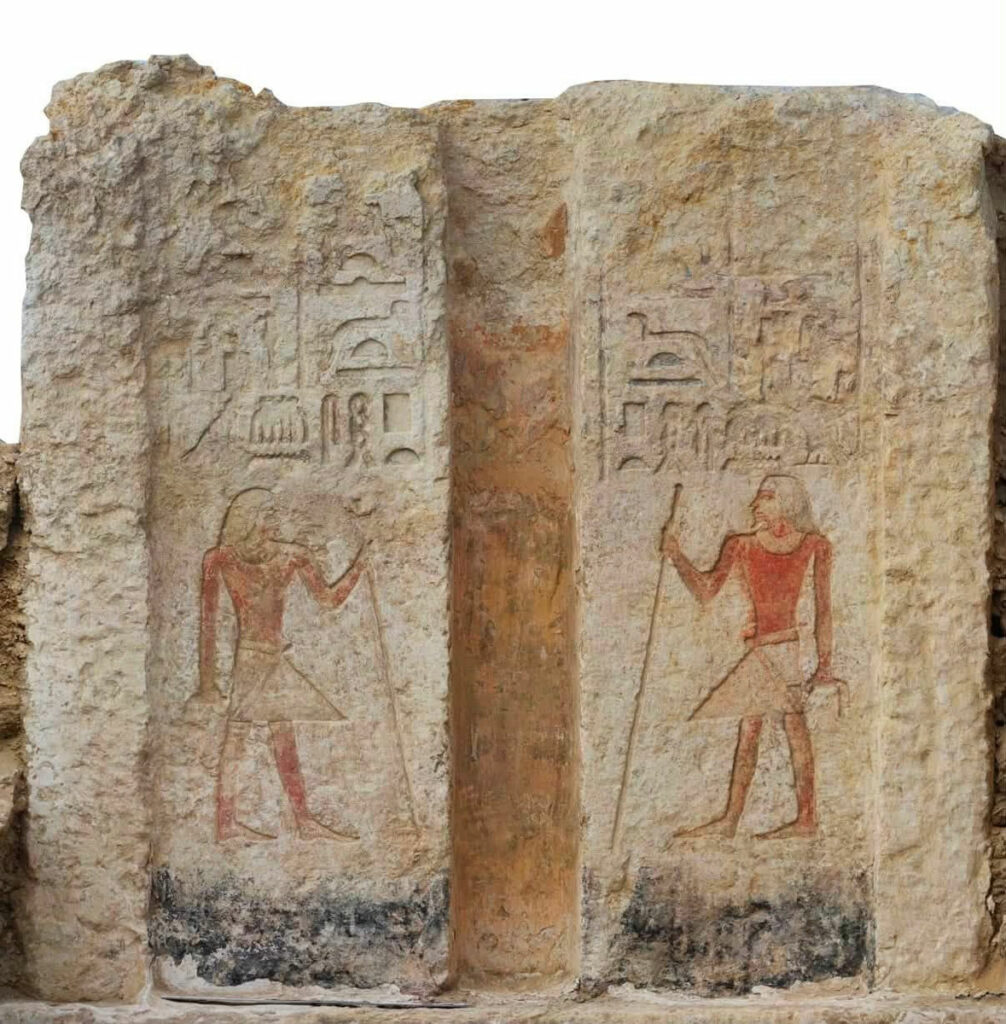
The tomb belonged to Sekhentio-Ptah and includes a funerary chapel and a false door inscribed with his official titles. These titles identify him as Royal Chamberlain, Overseer of All the Works of the King, and Keeper of the Secrets of Royal Decrees.

Among the most significant finds was a complete group of alabaster ritual objects, including an offering table, an offering slab and a purification basin. The objects were found in their original locations, a circumstance Hisham El-Leithy of Egypt’s Supreme Council of Antiquities said could help researchers examine Old Kingdom funerary rituals and practices.

The burial shafts contained human remains, three sealed stone sarcophagi, a wooden falcon statue, pottery, painted funerary cartonnage and more than 100 faience ushabti figurines. Some of the shafts are thought to have been looted during antiquity, according to El-Leithy.

The tomb and associated burials date to Egypt’s Old Kingdom, a period described in the report as approximately 2649 to 2150 B.C. The discovery combines an undisturbed official’s tomb with evidence from later or associated burials in the connected shafts, although the supplied reporting does not establish the identities of the individuals recovered from them.

Reference Desk

Sources & Further Reading

Continue Exploring

Related Archaeology

More stories
Fragments Reveal Previously Unknown Fourth-Century Roman Law Book
01
Artifacts
Score 65

Fragments Reveal Previously Unknown Fourth-Century Roman Law Book

A University of Cincinnati scholar and the Penn Museum have joined 50 animal-skin fragments into a double-sided page from a late-fourth-century Roman legal text. The Latin manuscript discusses taxation and public infrastructure but does not match any previously known imperial legal code.

Read story
Proteins Reveal Complex Paint Recipes in Ancient Egyptian Artworks
02
Ancient Civilizations
Score 65

Proteins Reveal Complex Paint Recipes in Ancient Egyptian Artworks

A study of 28 microscopic samples from 14 Egyptian artworks has identified animal glues from several species along with plant proteins linked to sesame and moringa. The findings suggest painters may have used seed-processing byproducts, offering new information for both ancient craft history and conservation.

Read story
Skeleton Found Inside Giant Roman Jar at Bulgarian Fortress
03
Bioarchaeology
Score 40

Skeleton Found Inside Giant Roman Jar at Bulgarian Fortress

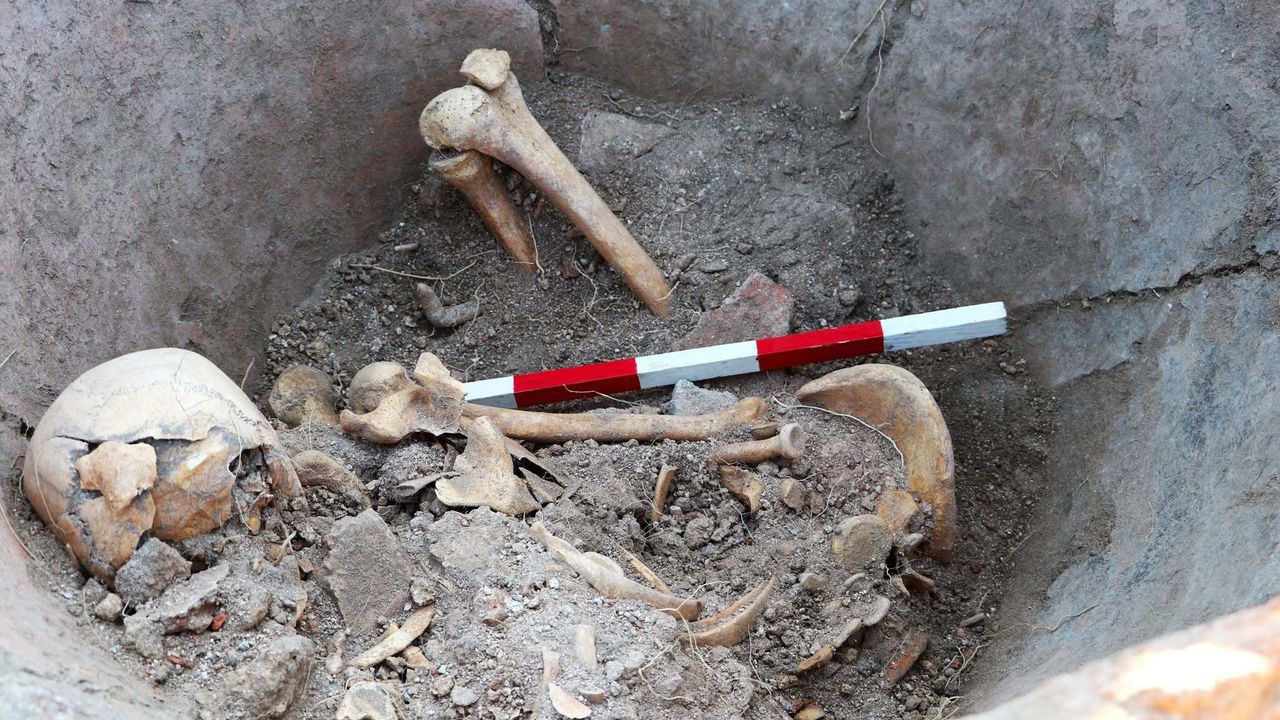
Archaeologists excavating the Roman colony of Deultum in Bulgaria found a human skeleton inside a large storage jar, or dolium. The remains may belong to a young man who sought shelter during an attack and fire around A.D. 400, but researchers have not yet established how he died.

Read story
LED Imaging Reveals Hidden Soil Differences at Danish Excavation
04
Excavations
Score 40

LED Imaging Reveals Hidden Soil Differences at Danish Excavation

A multispectral imaging system developed by Aarhus University and Moesgaard Museum uses 16 LED wavelengths to expose archaeological soil differences that ordinary photographs may miss. Tested at the Iron Age site of Sorte Muld, the system also made small bone fragments easier to detect under ultraviolet light.

Read story
Ancient DNA Identifies Cacao Consumption at Georgia’s Etowah Site
05
Bioarchaeology
Score 40

Ancient DNA Identifies Cacao Consumption at Georgia’s Etowah Site

DNA recovered from three pottery fragments indicates that people at the Etowah Mounds consumed cacao during the 11th and 12th centuries. The finding provides evidence of cacao use east of the Mississippi River and points to connections with regions where the tropical plant grew.

Read story
Dutch Child Labor Left Spinal Damage Visible in Skeletal Remains
06
Bioarchaeology
Score 40

Dutch Child Labor Left Spinal Damage Visible in Skeletal Remains

A study of 143 Dutch children and young adults who lived between the 1600s and 1800s found spinal wear and deformities associated with demanding physical work. The damage was most pronounced among children from rural dairy farms, while factory workers showed a different pattern of strain.

Read story