Archaeology.Today
Field Report

Pollen Reveals Repeated Repairs on 2,200-Year-Old Adriatic Shipwreck

A study of the Ilovik-Paržine 1 wreck off Croatia identified pine tar and a tar-beeswax coating used to protect its hull. Pollen preserved in the materials suggests the vessel was coated or repaired four to five times with substances sourced from different parts of the Adriatic and Mediterranean.

September 5, 2026
1 Source
Ilovik-Paržine 1
Pollen Reveals Repeated Repairs on 2,200-Year-Old Adriatic Shipwreck
The Story

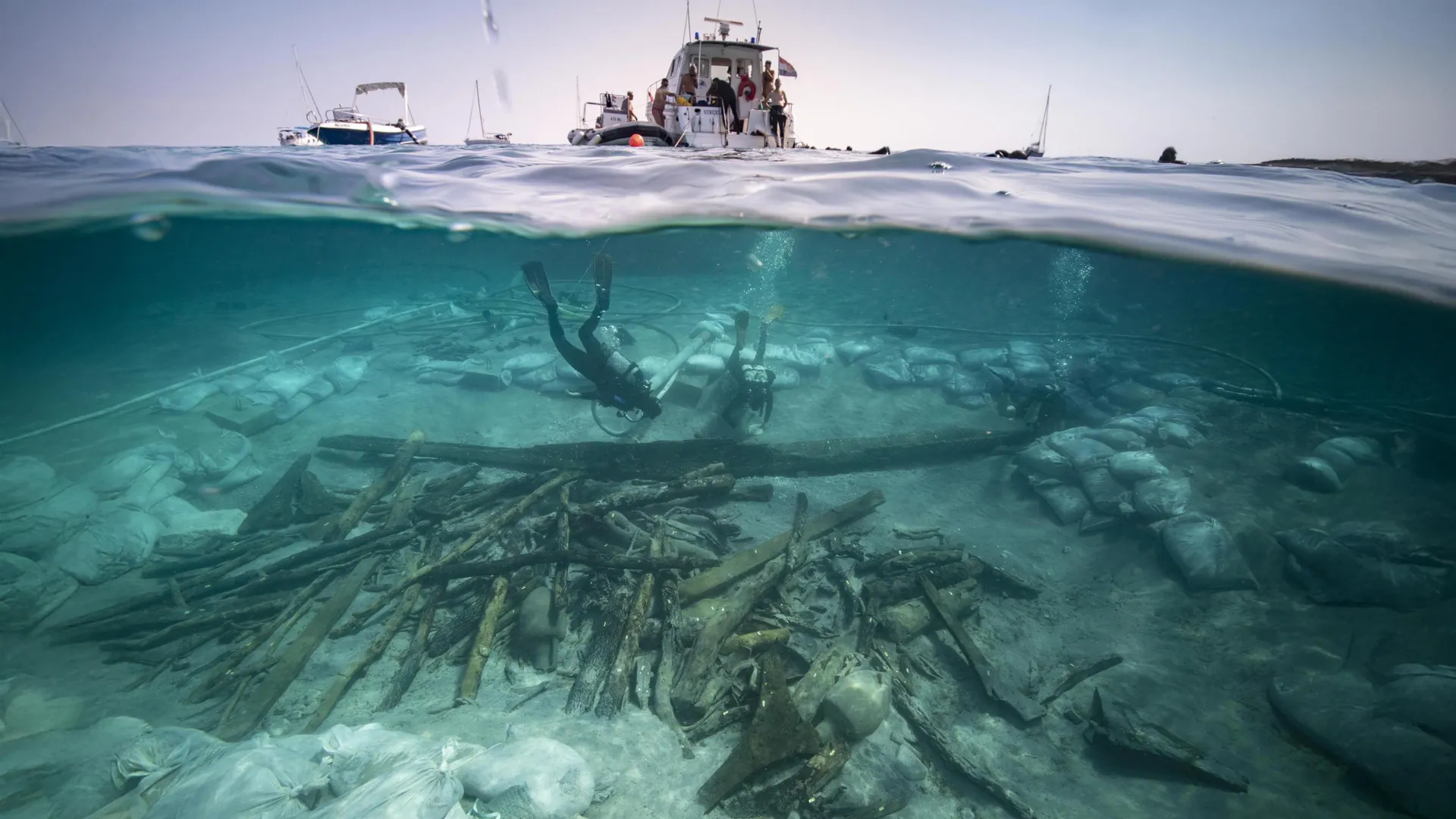
Researchers analyzing protective coatings from the Ilovik-Paržine 1 shipwreck have found evidence of ancient waterproofing practices and repeated repairs carried out over the vessel’s working life. The Roman Republican wreck sank about 2,200 years ago off the coast of present-day Croatia.

The study, published in Frontiers in Materials, examined 10 coating samples collected from the ship. Molecular analysis showed that the materials were primarily made from heated coniferous resin, or pine tar, commonly called pitch. One sample contained a mixture of pine tar and beeswax. Known to Greek shipbuilders as zopissa, this formulation was described as more flexible and easier to spread when heated.

The research combined molecular testing with pollen analysis, an approach that allowed the team to investigate not only what the coatings were made from but also where some of the materials may have been produced or applied. Sticky pitch can trap pollen from nearby vegetation, preserving a record of the surrounding landscape.

The pollen identified in the samples came from environments associated with Mediterranean and Adriatic coasts and valleys. The assemblage included plants linked to holly-oak and pine forests, Mediterranean shrubland, and areas where olive and hazel trees grew. Alder and ash pointed to riverbank and coastal vegetation, while smaller amounts of fir and beech were consistent with mountainous areas near the northeastern Adriatic coast.

The distribution of the coatings suggests that the ship received four or five separate applications. The stern and central sections appear to have been treated with the same material, while three distinct batches were identified around the bow. Researchers say this pattern may reflect repeated repairs using materials obtained in different locations around the Mediterranean.

Earlier analysis of the ship’s ballast had pointed to Brundisium, now Brindisi on Italy’s southeastern coast, as a possible construction location. The new pollen evidence suggests that some coatings may also have been applied there, while other layers could have been added along the northeastern Adriatic near the wreck’s final location.

The wreck was discovered in 2016 and has since been investigated several times. The study was conducted by researchers from the Croatian Conservation Institute’s Department for Underwater Archaeology and the ADRIBOATS program at Aix-Marseille University’s Centre Camille Jullian.
Reference Desk

Sources & Further Reading

Continue Exploring

Related Archaeology

More stories
Private Roman Bath Found in Imperial Palace at Serbia’s Vrelo-Šarkamen
01
Ancient Civilizations
Score 105

Private Roman Bath Found in Imperial Palace at Serbia’s Vrelo-Šarkamen

Archaeologists excavating the Vrelo-Šarkamen palace complex in eastern Serbia have uncovered a circular private bath with heated floors, three bathing pools and a steam room. The early fourth-century residence was occupied by Roman emperor Maximinus Daza, and the unusual design appears to have served high-status palace residents.

Read story
Theban Tomb Reveals Centuries of Changing Burial Practices
02
Ancient Civilizations
Score 40

Theban Tomb Reveals Centuries of Changing Burial Practices

A study of chamber three in Egyptian tomb TT 209 documented 16 mummified people, remains of at least four others and a mummified dog. The arrangement suggests that later burials were carefully adapted around earlier occupants rather than placed in a completely disordered space.

Read story
Stone Age Burial in Poland Contains Tooth Necklace and Human Skull Remains
03
Bioarchaeology
Score 40

Stone Age Burial in Poland Contains Tooth Necklace and Human Skull Remains

Archaeologists excavating a Roman-period cemetery near Wrocław uncovered an older burial dating to around 2900 B.C. The nearly complete skeleton of an adult man was accompanied by a serpentinite battle ax, amber beads, a flint blade, a 42-tooth necklace and two human skulls that may represent decapitated heads.

Read story
AI Models Reconstruct Sensory Experiences in Etruscan Tombs
04
Ancient Civilizations
Score 40

AI Models Reconstruct Sensory Experiences in Etruscan Tombs

A study of two painted tombs at Tarquinia, Italy, combines 3D modeling, acoustic measurements and AI-based visual analysis to examine how ancient visitors may have experienced light, imagery and sound. The researchers find sharply different sensory environments, while noting that intentional design cannot be established.

Read story
Archaeology
Artifacts
Score 20

Archaeology of Learning in Medieval Greenland Examines Children’s Play

Research combining artifacts, historical records and ethnographic information compares how Norse and Inuit children learned in medieval Greenland. The study argues that contrasting approaches to play and instruction shaped how communities engaged with their environments as climate conditions changed during the Little Ice Age.

Read story
Intact Indigenous Pot Found at Historic Florida Mission Site
06
Discoveries
Score 20

Intact Indigenous Pot Found at Historic Florida Mission Site

University of Florida students uncovered a small, undecorated clay vessel at Mission San Francisco de Potano, a former 17th-century mission and Potano-Timucua village near Gainesville. The pot is roughly 400 years old and appears to have been deliberately placed in a pit, though its purpose remains unknown.

Read story