Archaeology.Today
Field Report

Theban Tomb Reveals Centuries of Changing Burial Practices

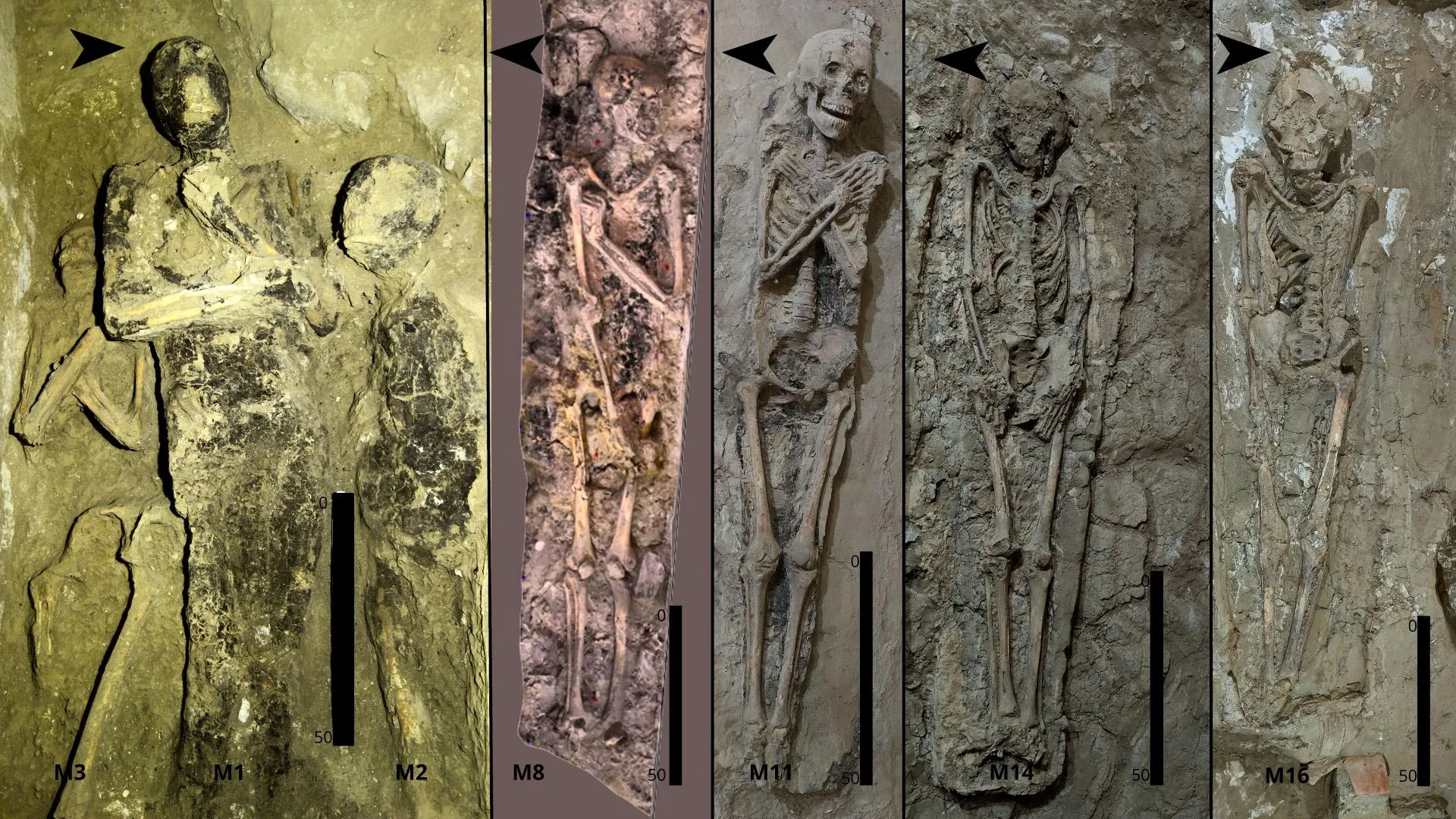
A study of chamber three in Egyptian tomb TT 209 documented 16 mummified people, remains of at least four others and a mummified dog. The arrangement suggests that later burials were carefully adapted around earlier occupants rather than placed in a completely disordered space.

September 5, 2026
1 Source
Theban Tomb 209
Theban Tomb Reveals Centuries of Changing Burial Practices
The Story

A chamber in the Theban Necropolis has revealed evidence of burial practices that changed over several centuries, while continuing to account for earlier occupants. Researchers identified 16 mummified people, the remains of at least four more individuals and a mummified dog in chamber three of tomb TT 209.

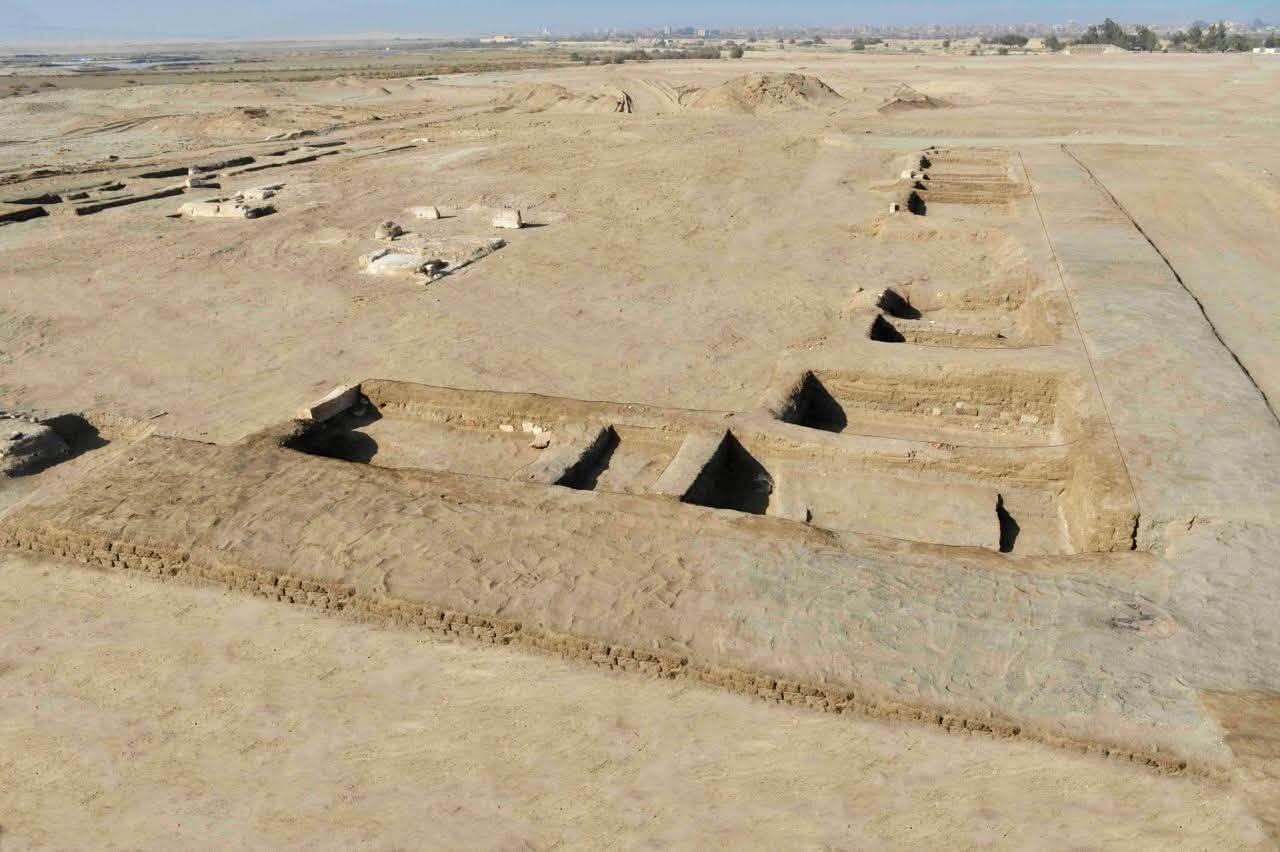
The findings come from a study by researchers in Spain, published in Frontiers in Environmental Archaeology. The tomb, located across the Nile from Luxor, was built during Egypt’s Twenty-fifth Dynasty, dated in the study to 754–656 BCE, and remained in use until the Ptolemaic period, dated to 305–30 BCE.

The team excavated the chamber, photographed the mummies and documented the position and orientation of each body in relation to the architecture. This work identified nine funerary deposits, including both individual and multiple burials.

The earliest burials were generally separated from one another and placed in coffins. Researchers associated these individuals with funerary nets, amulets and costly materials, including objects connected with Phoenician amphorae. They said this combination may indicate that the earliest people buried in the chamber held relatively high social status.

Later, especially toward the end of the Twenty-fifth Dynasty and during the Persian period, new burials increasingly occupied whatever space remained. The chamber became more densely filled, and bodies were often positioned vertically. Researchers found bodies placed on top of one another in two-thirds of the chamber’s burial deposits. Some later individuals also had one arm folded inward, while others were placed with both arms crossed over the chest in what Egyptologists call the Osirian position.

A Ptolemaic-period deposit in the southeastern part of the chamber contained four mummies stacked with a mummified dog. The human bodies had no coffins but had been carefully mummified and were associated with upright jars. The researchers said the dog could reflect a close relationship with the people buried there, or possibly a ritual role as a symbolic guide to the afterlife. The study does not establish which interpretation is correct.

Flooding, fires and repeated entry into the tomb disturbed parts of the deposit, making it impossible to reconstruct every stage or determine the exact order of some burials. Even so, the researchers argue that the crowded chamber may reflect an evolving spatial logic rather than simple disorder. They suggest that each new deposition adapted the available space while retaining awareness of earlier burials.

Reference Desk

Sources & Further Reading

Continue Exploring

Related Archaeology

More stories
Inscription Near Sinai May Identify Ramesses II-Era City of Mesn
01
Artifacts
Score 185

Inscription Near Sinai May Identify Ramesses II-Era City of Mesn

A 3,200-year-old inscription discovered at Tell Abu Seifi refers to Horus as the “Lord of the City of Mesn.” Together with a nearby temple dedicated to the god, the find may link the site to a long-sought Egyptian settlement, although researchers say further evidence is needed.

Read story
Pollen Reveals Repeated Repairs on 2,200-Year-Old Adriatic Shipwreck
02
Underwater Archaeology
Score 40

Pollen Reveals Repeated Repairs on 2,200-Year-Old Adriatic Shipwreck

A study of the Ilovik-Paržine 1 wreck off Croatia identified pine tar and a tar-beeswax coating used to protect its hull. Pollen preserved in the materials suggests the vessel was coated or repaired four to five times with substances sourced from different parts of the Adriatic and Mediterranean.

Read story
Stone Age Burial in Poland Contains Tooth Necklace and Human Skull Remains
03
Bioarchaeology
Score 40

Stone Age Burial in Poland Contains Tooth Necklace and Human Skull Remains

Archaeologists excavating a Roman-period cemetery near Wrocław uncovered an older burial dating to around 2900 B.C. The nearly complete skeleton of an adult man was accompanied by a serpentinite battle ax, amber beads, a flint blade, a 42-tooth necklace and two human skulls that may represent decapitated heads.

Read story
AI Models Reconstruct Sensory Experiences in Etruscan Tombs
04
Ancient Civilizations
Score 40

AI Models Reconstruct Sensory Experiences in Etruscan Tombs

A study of two painted tombs at Tarquinia, Italy, combines 3D modeling, acoustic measurements and AI-based visual analysis to examine how ancient visitors may have experienced light, imagery and sound. The researchers find sharply different sensory environments, while noting that intentional design cannot be established.

Read story
Private Roman Bath Found in Imperial Palace at Serbia’s Vrelo-Šarkamen
05
Ancient Civilizations
Score 40

Private Roman Bath Found in Imperial Palace at Serbia’s Vrelo-Šarkamen

Archaeologists excavating the Vrelo-Šarkamen palace complex in eastern Serbia have uncovered a circular private bath with heated floors, three bathing pools and a steam room. The early fourth-century residence was occupied by Roman emperor Maximinus Daza, and the unusual design appears to have served high-status palace residents.

Read story
Archaeology
Artifacts
Score 20

Archaeology of Learning in Medieval Greenland Examines Children’s Play

Research combining artifacts, historical records and ethnographic information compares how Norse and Inuit children learned in medieval Greenland. The study argues that contrasting approaches to play and instruction shaped how communities engaged with their environments as climate conditions changed during the Little Ice Age.

Read story