Archaeology.Today
Field Report

Two 40,000-Year-Old Bird Figurines Found at Germany’s Hohle Fels Cave

Archaeologists discovered two small ivory bird figurines at Hohle Fels Cave in southwestern Germany in 2025. The carvings, among the cave’s early figurative artworks, are being examined for what they may reveal about Ice Age human behavior and success.

September 2, 2026
2 Sources
Hohle Fels Cave
Two 40,000-Year-Old Bird Figurines Found at Germany’s Hohle Fels Cave
The Story

Two small bird figurines carved from ivory have been discovered at Hohle Fels Cave in southwestern Germany, adding to the site’s collection of figurative art dating to around 40,000 years ago.

The finds were made by archaeologists in 2025. Both carvings resemble relatives of the pheasant called ptarmigans, according to reporting by Nature Archaeology. One bird is shown with its wings extended, while the other appears to be resting.

Hohle Fels has produced some of the world’s oldest known figurative artworks. The newly reported objects are being considered not only as individual carvings, but also as evidence of the ways ancient humans represented animals and expressed behavior through art.

The figurines were found in a cave environment that remains markedly cooler than the surrounding landscape. Nature Archaeology described temperatures inside Hohle Fels at roughly 9 or 10 degrees Celsius during a June heatwave in Europe, when conditions outside reached 35 degrees Celsius in the shade.

Nicholas Conard, the excavation leader, discusses the discoveries in the reporting and raises a broader question: whether artistic practices such as carving and figurative representation played a role in the success of ancient human populations. The figurines may offer clues to that question, but the available reports present this as an issue for interpretation rather than a settled conclusion.

Alexander Janas, an archaeologist at the Senckenberg Centre for Human Evolution and Palaeoenvironment in Tübingen, is also associated with the work. The discovery adds two more examples to the artistic record from Hohle Fels while leaving open what specific purposes the carvings served and how their makers understood them.

Reference Desk

Sources & Further Reading

Continue Exploring

Related Archaeology

More stories
Inner-Ear Bone Study Traces Population Change in Prehistoric Northeast Africa
01
Human Origins
Score 20

Inner-Ear Bone Study Traces Population Change in Prehistoric Northeast Africa

An analysis of bony labyrinths from 148 prehistoric and recent individuals identifies continuity among Middle Nile Valley foragers but a marked morphological break after the emergence of Neolithic food-producing communities. The results also point to substantial population diversity and possible isolation across northeastern Africa.

Read story
Study Finds La Mojana Raised Fields Could Have Been Built Cooperatively
02
Discoveries
Score 20

Study Finds La Mojana Raised Fields Could Have Been Built Cooperatively

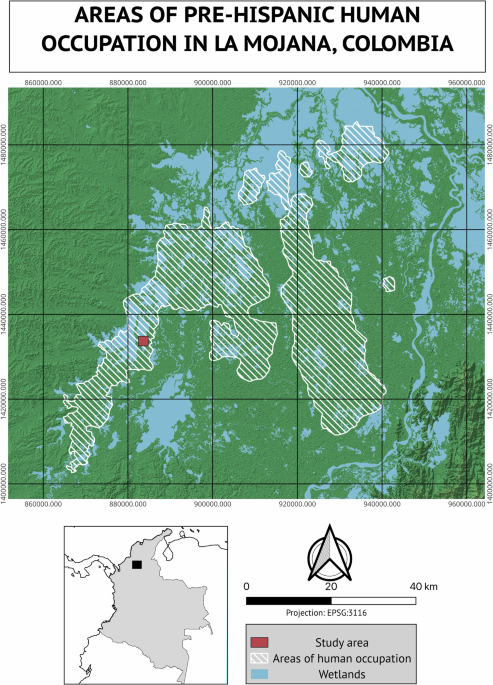
An analysis of pre-Hispanic canal-and-ridge systems in Colombia’s La Mojana suggests that a 500-hectare network could have been constructed by local communities within one dry season. The findings challenge the assumption that landscapes covering more than 500,000 hectares required centralized political control.

Read story
Roman Shipwreck Carrying Hundreds of Amphorae Found off Sicily
03
Underwater Archaeology
Score 20

Roman Shipwreck Carrying Hundreds of Amphorae Found off Sicily

Italy’s Carabinieri cultural heritage protection unit has located a Roman shipwreck about three miles off Mazara del Vallo, Sicily. The approximately 2,100-year-old vessel contains around 500 amphorae, along with parts of anchors, and will undergo further scientific documentation.

Read story
Virtual Hunting Study Tests How Easily Fallow Deer Could Be Seen
04
Discoveries
Score 20

Virtual Hunting Study Tests How Easily Fallow Deer Could Be Seen

Two online visual-search experiments examined how fallow deer coat patterns, distance and body orientation affected human detection in a simulated Pleistocene woodland. The results may help interpret proposed projectile lesions on deer bones in the archaeological record.

Read story
Smallpox DNA from Chilean Mummies Points to European Arrival in Americas
05
Discoveries
Score 20

Smallpox DNA from Chilean Mummies Points to European Arrival in Americas

Viral DNA recovered from the mummified remains of two people who died more than 400 years ago in what is now Chile provides the first genomic evidence about when smallpox reached the Americas. The evidence points to Europeans as the source of its arrival.

Read story
LiDAR Survey Reveals More Than 20,000 Amazonian Earthworks
06
Archaeological Science
Score 20

LiDAR Survey Reveals More Than 20,000 Amazonian Earthworks

A study using canopy-penetrating LiDAR has expanded the known distribution of precolonial earthworks in southwestern Amazonia. The researchers tentatively estimate that the region’s population reached between 1.25 million and 3 million people around AD 100–300, although the estimate depends on evidence from a limited survey area.

Read story