Archaeology.Today
Field Report

Niah Caves’ UNESCO Status Expected to Bring More Researchers

Malaysia’s Niah Caves, recently designated a UNESCO World Heritage Site, is expected to attract historians and other academics for further research. UNESCO describes the cave complex as preserving at least 50,000 years of human interaction with rainforest environments.

September 5, 2026
1 Source
Niah Caves
Niah Caves’ UNESCO Status Expected to Bring More Researchers
The Story

Malaysia’s recent UNESCO World Heritage designation for Niah Caves is expected to bring more historians and academics to the site for in-depth archaeological research, according to Sarawak Deputy Minister Datuk Rosey Yunus.

The cave complex preserves what UNESCO describes as the longest known record of human interaction with rainforests. The record extends for at least 50,000 years, spanning the Pleistocene to the Mid-Holocene periods.

Niah Caves’ archaeological evidence includes artifacts and deposits, prehistoric rock paintings, and boat-shaped burials found along the northern edge of the massif. Yunus said these remains contribute to research into human development, adaptation and migration in Southeast Asia and beyond.

The site’s World Heritage recognition highlights the range and duration of evidence preserved within the cave complex. However, the designation is also expected to have effects beyond research. Reporting by Southeast Asian Archaeology, citing the Borneo Post, said the recognition could increase tourism and benefit the local economy.

Yunus, who is also the assemblywoman for Bekenu, emphasized the global significance of Niah Caves and its archaeological record. The expected arrival of researchers would provide opportunities for further study of the site’s artifacts, deposits, paintings and burials, while its international recognition could increase public attention to the location.
Reference Desk

Sources & Further Reading

Continue Exploring

Related Archaeology

More stories
Inner-Ear Bone Study Traces Population Change in Prehistoric Northeast Africa
01
Human Origins
Score 55

Inner-Ear Bone Study Traces Population Change in Prehistoric Northeast Africa

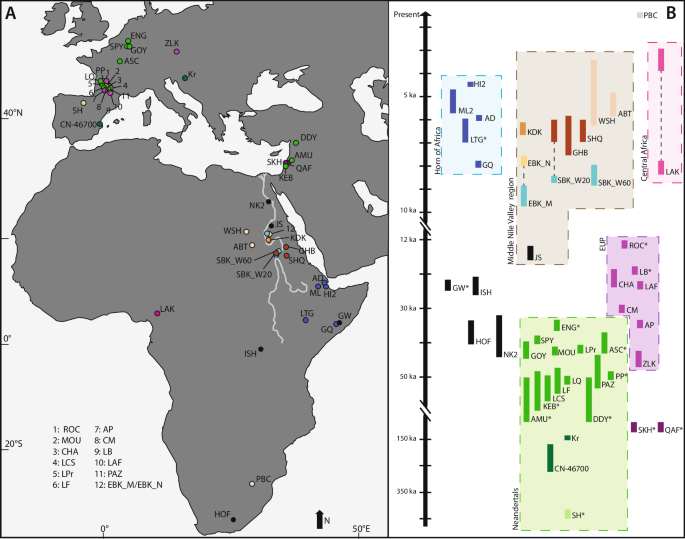
An analysis of bony labyrinths from 148 prehistoric and recent individuals identifies continuity among Middle Nile Valley foragers but a marked morphological break after the emergence of Neolithic food-producing communities. The results also point to substantial population diversity and possible isolation across northeastern Africa.

Read story
Virtual Hunting Study Tests How Easily Fallow Deer Could Be Seen
02
Discoveries
Score 55

Virtual Hunting Study Tests How Easily Fallow Deer Could Be Seen

Two online visual-search experiments examined how fallow deer coat patterns, distance and body orientation affected human detection in a simulated Pleistocene woodland. The results may help interpret proposed projectile lesions on deer bones in the archaeological record.

Read story
Archaeology Southwest Highlights Threats to Section 106 and Southwest Heritage
03
Discoveries
Score 30

Archaeology Southwest Highlights Threats to Section 106 and Southwest Heritage

A roundup from Archaeology Southwest points to proposed changes to Section 106, border-barrier construction concerns in the Lower Pecos Canyonlands and Big Bend National Park, and potential development near several protected cultural landscapes.

Read story
Construction Ban Near Banteay Chhmar Supports UNESCO Bid
04
Heritage
Score 20

Construction Ban Near Banteay Chhmar Supports UNESCO Bid

Authorities in Cambodia’s Banteay Meanchey province are enforcing a ban on new construction near Banteay Chhmar Temple, a 12th-century Mahayana Buddhist site being considered for UNESCO World Heritage status. Officials say uncontrolled or improperly carried out building could undermine the temple’s eligibility.

Read story
Monument Protections Cut as Chaco Buffer Faces Proposed Revocation
05
Heritage
Score 20

Monument Protections Cut as Chaco Buffer Faces Proposed Revocation

Archaeology Southwest reports that executive orders reduce Bears Ears and Grand Staircase-Escalante national monuments by nearly 3 million acres, while the Bureau of Land Management seeks to revoke a 20-year protection order covering federal lands around Chaco Culture National Historical Park. Tribal governments and preservation groups are opposing both actions.

Read story
Proposed Section 106 Changes Would Narrow Cultural-Resource Review
06
Heritage
Score 20

Proposed Section 106 Changes Would Narrow Cultural-Resource Review

A draft revision to the federal regulations implementing Section 106 of the National Historic Preservation Act could shorten review periods, remove consideration of indirect and cumulative effects, and reduce protections for traditional cultural places. Archaeology Southwest says the changes come as a separate Bureau of Land Management proposal threatens protections near Chaco Culture National Historical Park.

Read story