
Archaeology.Today
Field Report

DNA Recovered From Historic Parchment Without Damaging Manuscripts

Researchers tested a dry-brush technique on 91 manuscripts at Duke University, recovering cellular material for genetic analysis without visibly harming the documents. The method could help investigate manuscript origins, trade, livestock history and agricultural change across roughly 1,300 years of records.

September 8, 2026
1 Source
DNA Recovered From Historic Parchment Without Damaging Manuscripts
The Story

Researchers have demonstrated a nondestructive method for recovering genetic material from historic parchment, potentially turning centuries-old manuscripts into sources of evidence about both documents and the animals used to make them.

The technique was tested on 91 manuscripts held in the Rubenstein Library at Duke University. The documents originated from locations ranging from England to Ethiopia and date from the late eighth century through the early 20th century.

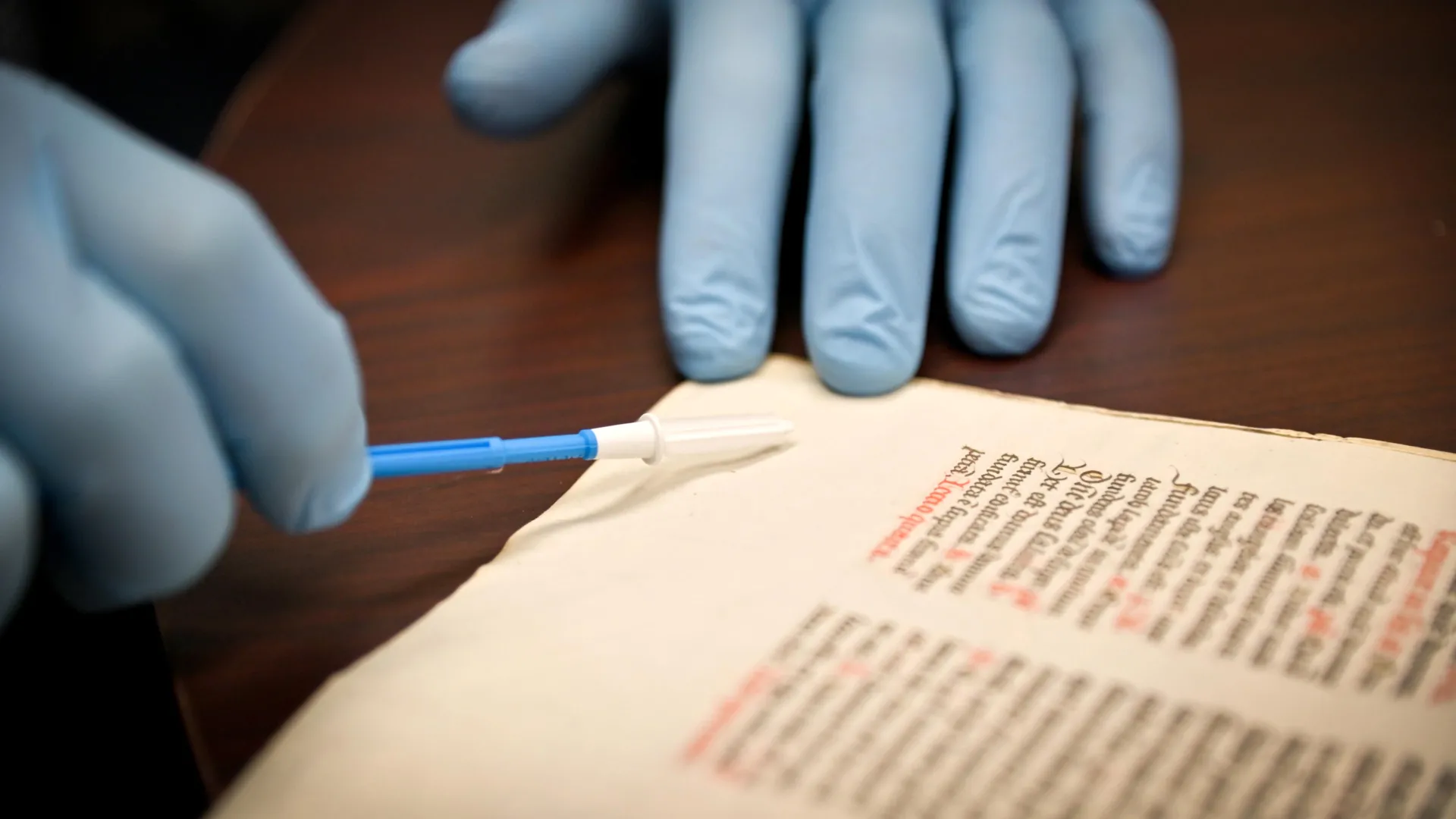
Parchment is made from animal skin, meaning that cellular material can remain alongside writing, maps and other records on its surface. To collect it, researchers gently rubbed each document with a dry cytology brush—the type of brush also used for Pap smears. The team then removed the collected material and applied next-generation sequencing methods to isolate and amplify genetic sequences.

According to the research report from North Carolina State University, the sampling did not damage the manuscripts. That result addresses a central difficulty in parchment research: libraries, museums and other collections may be reluctant to permit sampling when it could permanently harm culturally important objects.

The recovered DNA could provide information about the animals whose skins became parchment and, potentially, about the history of domesticated species. Researchers say future analyses could examine how livestock breeds developed, how farm animals changed over time and what diseases affected them.

Genetic evidence may also help investigate where and when individual manuscripts were produced. Because parchment was used across Europe, the Middle East and parts of Africa for many centuries, the material could contribute to research on trade routes, agricultural practices and everyday life, alongside the historical information recorded in the texts themselves.

The researchers describe historic parchment as a largely unexplored source that brings genetic analysis into conversation with medieval history, archaeology and other fields. The study, “Adventures in the Animal Archive: New Techniques for the Genetic Analysis of Parchment Manuscripts,” was published in Manuscript Studies: A Journal of the Schoenberg Institute for Manuscript Studies. The authors include researchers from North Carolina State University, Duke University and Western Sydney University.
Reference Desk

Sources & Further Reading

Continue Exploring

Related Archaeology

More stories
Elephant Bone Tool from Boxgrove Dates to Nearly 500,000 Years Ago
01
Artifacts
Score 65

Elephant Bone Tool from Boxgrove Dates to Nearly 500,000 Years Ago

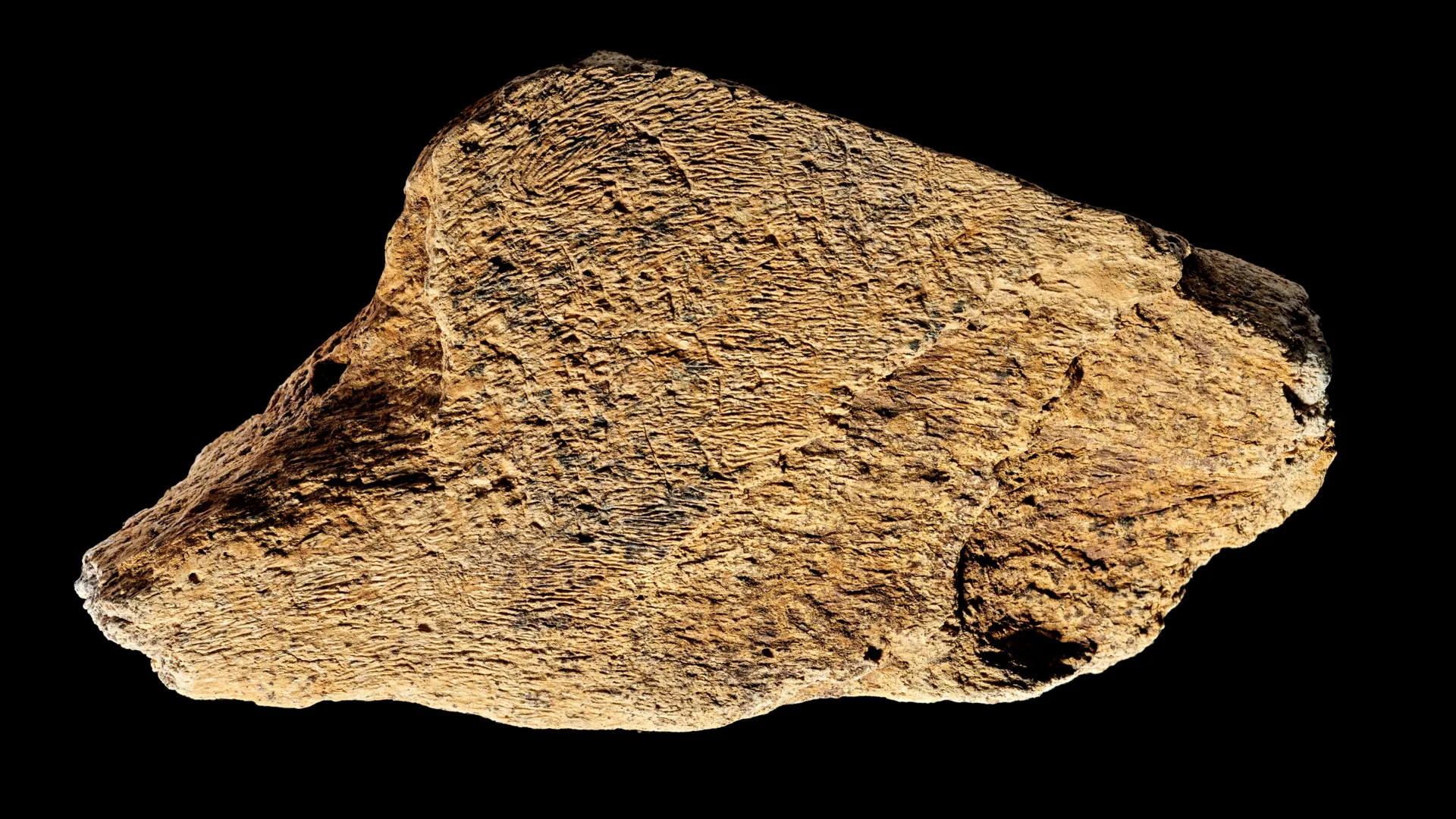
Researchers have identified a shaped elephant or mammoth bone fragment from Boxgrove in southern England as a reusable tool for retouching stone handaxes. The artifact, analyzed with 3D scanning and microscopy, is described as the oldest known elephant-bone tool in Europe.

Read story
Radiocarbon Dating Places Aubin Tonalámatl Codex Before Spanish Conquest
02
Archaeological Science
Score 40

Radiocarbon Dating Places Aubin Tonalámatl Codex Before Spanish Conquest

A new carbon-14 study places the Aubin Tonalámatl Codex in the late 15th century, with 1494 proposed as its most likely production date. The findings support its identification as a pre-Hispanic manuscript rather than a colonial-era copy or imitation.

Read story
More Than 2,600 Medieval Silver Coins Found in Kolomna
03
Artifacts
Score 20

More Than 2,600 Medieval Silver Coins Found in Kolomna

Rescue excavations in Kolomna have uncovered more than 2,600 medieval silver dengi concealed in a ceramic jug. Researchers describe the assemblage as the largest intact Russian coin hoard known from the first half of the 15th century, with rare locally minted coins and previously unknown varieties.

Read story
Hadrian Statue Reconstructed from Roman Ruins at Kibyra
04
Artifacts
Score 20

Hadrian Statue Reconstructed from Roman Ruins at Kibyra

Archaeologists in southwestern Turkey have reconstructed a 2.14-meter marble statue of Emperor Hadrian from fragments found at Kibyra’s Monumental Entrance Gate. The excavation also produced remains believed to represent Empress Sabina and other Roman sculptures, many of which may have been shattered by an earthquake in AD 417.

Read story
Ancient DNA Tracks Population Replacement at French Megalithic Tomb
05
Bioarchaeology
Score 20

Ancient DNA Tracks Population Replacement at French Megalithic Tomb

DNA from 132 people buried at a megalithic tomb near Bury, north of Paris, indicates a sharp population break around 3000 BC. Researchers found evidence of disease and severe mortality, but say the collapse likely resulted from several interacting pressures rather than plague alone.

Read story
Serpent Artefacts Shed Light on Climate Responses at Ancient Vichama
06
Artifacts
Score 20

Serpent Artefacts Shed Light on Climate Responses at Ancient Vichama

Archaeologists working at Vichama in Peru have documented serpent imagery in bone and clay, adding to evidence that the city’s inhabitants connected water, fertility and renewal with memories of environmental disruption around 3,800 years ago.

Read story