A peatland restoration project on Exmoor has revealed a buried prehistoric woodland floor alongside plant and insect remains preserved in the peat at the National Trust’s Holnicote Estate in Somerset.
The discoveries were made at Alderman’s Barrow Allotment during a year-long project led by the South West Peatland Partnership, working with the National Trust. The restoration work included building leaky log dams to slow water movement through the valley and create a higher, more stable water table. The measures are intended to improve peatland health, water quality and climate resilience while protecting archaeological material.
Samples were collected at 5-centimetre intervals through a 1.5-metre-deep peat sequence and analysed at Wessex Archaeology’s specialist laboratory in Salisbury. Among the finds were more than 100 fragments of Hydraena riparia, a semi-aquatic beetle that still exists today and thrives in damp conditions. The samples also contained prehistoric dung beetles, rove beetles, moss mites and water scavenger beetles.
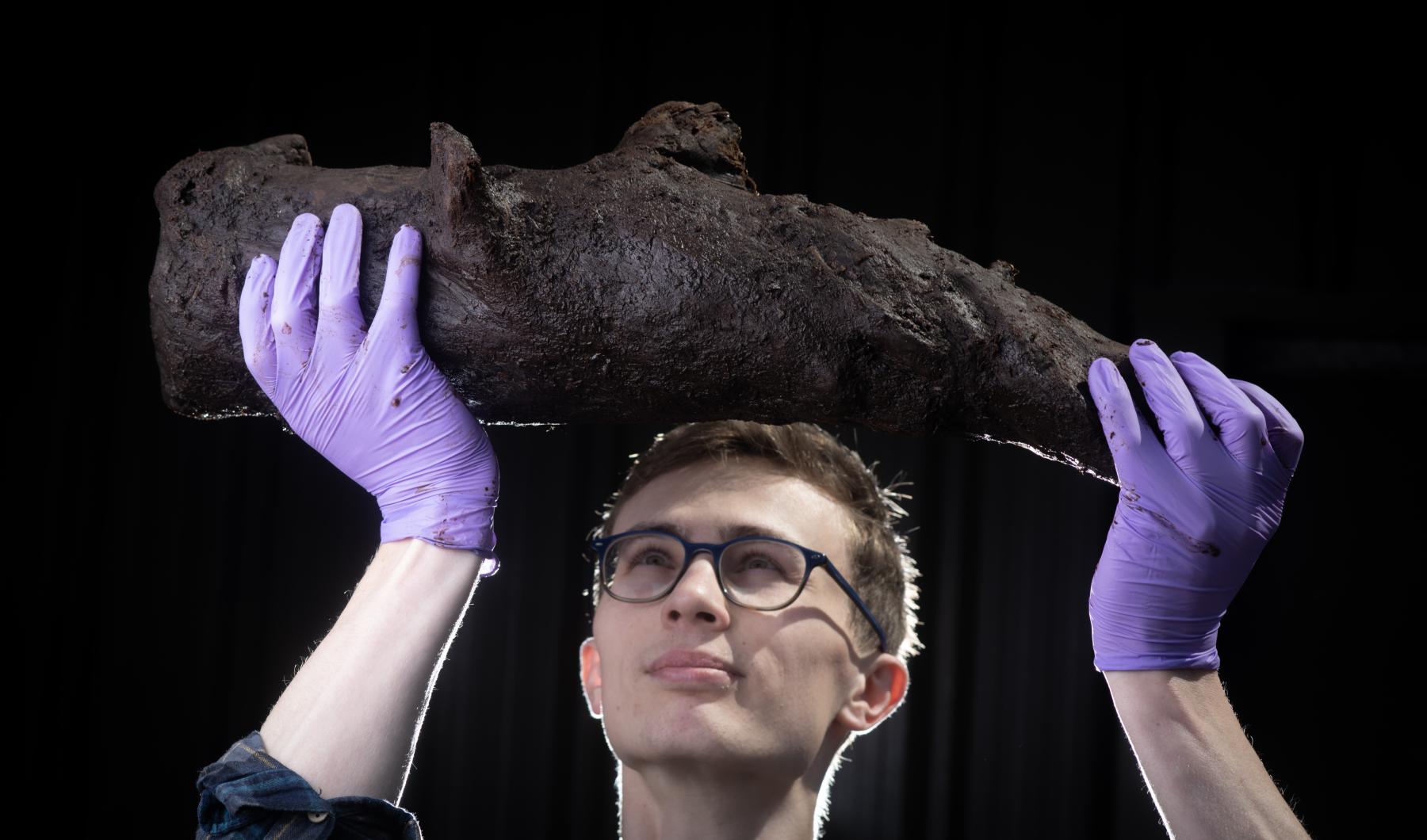
Wood fragments from a prehistoric woodland floor—including trunks, branches and twigs—were dated to around 4,500 to 3,500 years ago. This places them in the late Neolithic and middle Bronze Age, with calibrated date ranges given as 2860–2570 Cal BC to 1400–1220 Cal BC. The remains indicate the presence of alder and willow, while seeds provide evidence of birch growing nearby. Sedges and rushes were found within the wet woodland habitat, and birch and oak were present in the wider landscape.
Other woodland remains from the site, including a section of willow, date to as early as the beginning of the Neolithic, between 3940 and 3650 Cal BC.
Researchers said the material provides a long-term baseline for understanding how the peatland formed and how its vegetation and insect communities changed. The preserved wood may also help investigate the possible contributions of climate change and woodland clearance to the decline of woodland during the later prehistoric period.
According to Wessex Archaeology, the low-oxygen conditions within healthy peat allow organic materials to survive for thousands of years. Continued restoration is therefore intended not only to improve the landscape but also to prevent the archaeological and environmental archive from drying out, eroding and being lost.