Archaeology.Today
Field Report

Prado Vargas Excavation Expands Neanderthal Layer to 140 Square Meters

The 2026 excavation season at Prado Vargas Cave in northern Spain added 32 square meters to a Neanderthal occupation layer dated to about 46,000 years ago. More than 1,500 animal remains and stone tools were recovered, supporting the interpretation of the area as a substantial camp.

September 7, 2026
1 Source
Prado Vargas Cave
Prado Vargas Excavation Expands Neanderthal Layer to 140 Square Meters
The Story

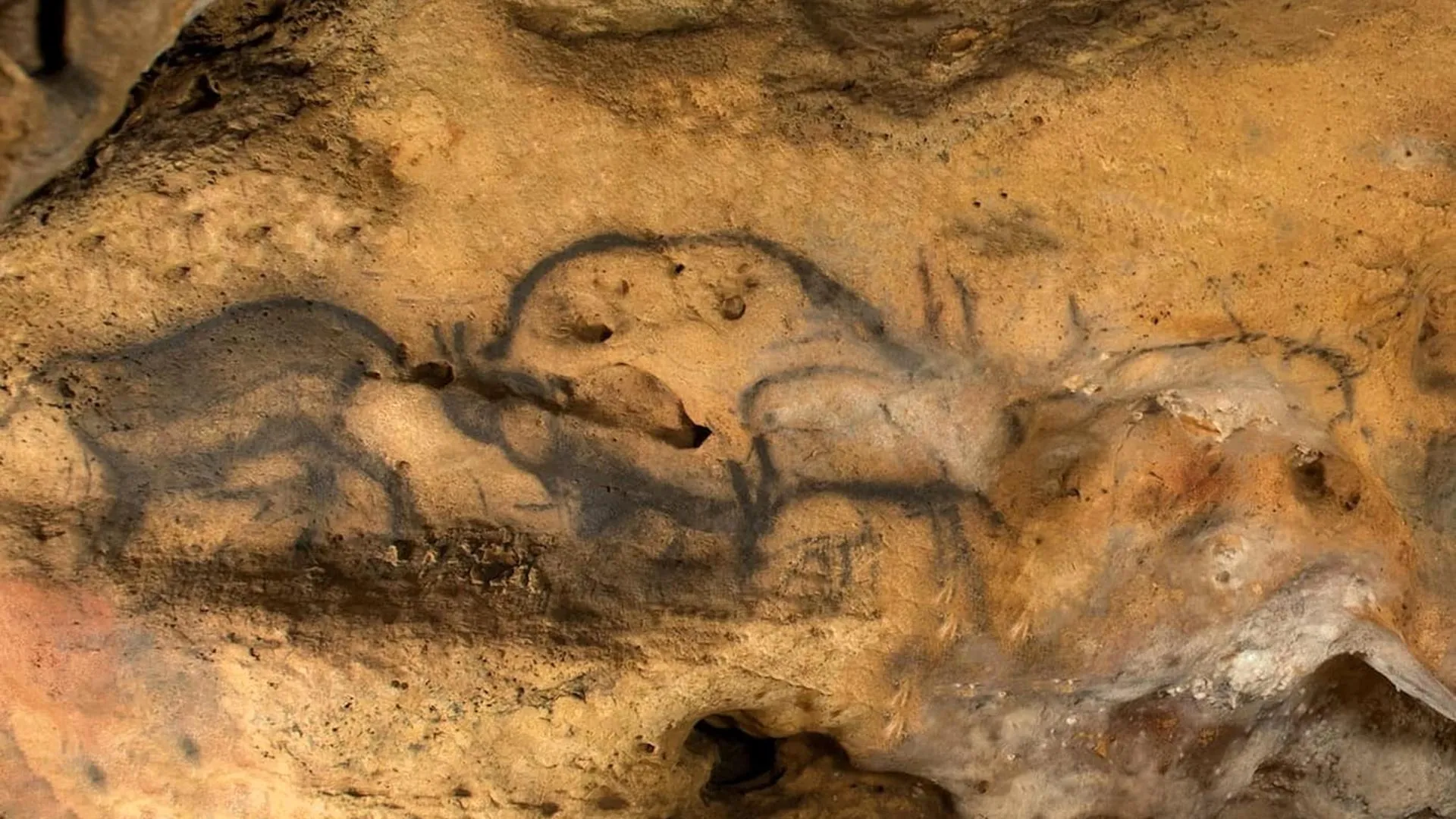
Excavations at Prado Vargas Cave in northern Spain have expanded the exposed area of a Neanderthal occupation layer to 140 square meters. The 2026 field season added 32 square meters at sublevel 4D and produced more than 1,500 animal remains and stone tools, according to Phys.org Archaeology.

The cave is located in Cornejo, in Burgos province, within the Ojo Guareña karst complex. Sublevel 4D is estimated to be about 46,000 years old. Researchers interpret the growing concentration of evidence as support for the hypothesis that the layer represents a large Neanderthal camp, although that interpretation remains a research conclusion rather than a direct identification of the site’s function.

The excavation was co-directed by Alfonso Benito of the Centro Nacional de Investigación sobre la Evolución Humana, Marta Navazo of the University of Burgos and Rodrigo Alonso of the Museum of Human Evolution. About 20 archaeologists and students participated, with teams from Spanish and Chilean universities and museums represented.

Work this summer concentrated on the cave entrance. Animal remains included teeth and bones from wild boar, horse, steppe bison, aurochs, fallow deer and red deer. Many limb bones carry cut marks or percussion traces. These marks are consistent with carcass processing and the breaking of long bones to obtain marrow.

Most of the stone tools—about 95%—were made from flint. The remainder used quartzite and quartz pebbles. Unretouched sharp flakes were the most common forms, followed by scrapers, notches and denticulates.

Several bone retouchers were among the season’s notable finds. These animal-bone fragments were used to shape and maintain stone-tool edges. Including examples recovered in earlier seasons, researchers have documented approximately 100 at Prado Vargas, making the site a significant source of evidence for this technological practice.

The excavation team proposes that Neanderthal groups occupied sublevel 4D repeatedly and for extended periods, mainly from spring through late autumn, over several generations. The cave was later used by Homo sapiens: younger sublevels 4A-AB date to the Upper Paleolithic, and a hearth found during the 2025 season has a preliminary age of about 35,000 years.

Community participants also washed and sorted roughly half a tonne of sediment from level 4. The work recovered small-mammal remains that researchers plan to use in reconstructing Late Pleistocene environmental conditions at Ojo Guareña.

Reference Desk

Sources & Further Reading

Continue Exploring

Related Archaeology

More stories
Neanderthal DNA Pattern Does Not Prove Prehistoric Romance
01
Human Origins
Score 195

Neanderthal DNA Pattern Does Not Prove Prehistoric Romance

An analysis of Neanderthal ancestry on the X chromosome has been interpreted as potentially consistent with partner preference, but the genetic pattern may also reflect biology, migration or social organization. Evidence from Neanderthal sites in Spain and Belgium points to more complex possibilities.

Read story
Elephant Bone Tool from Boxgrove Dates to Nearly 500,000 Years Ago
02
Artifacts
Score 65

Elephant Bone Tool from Boxgrove Dates to Nearly 500,000 Years Ago

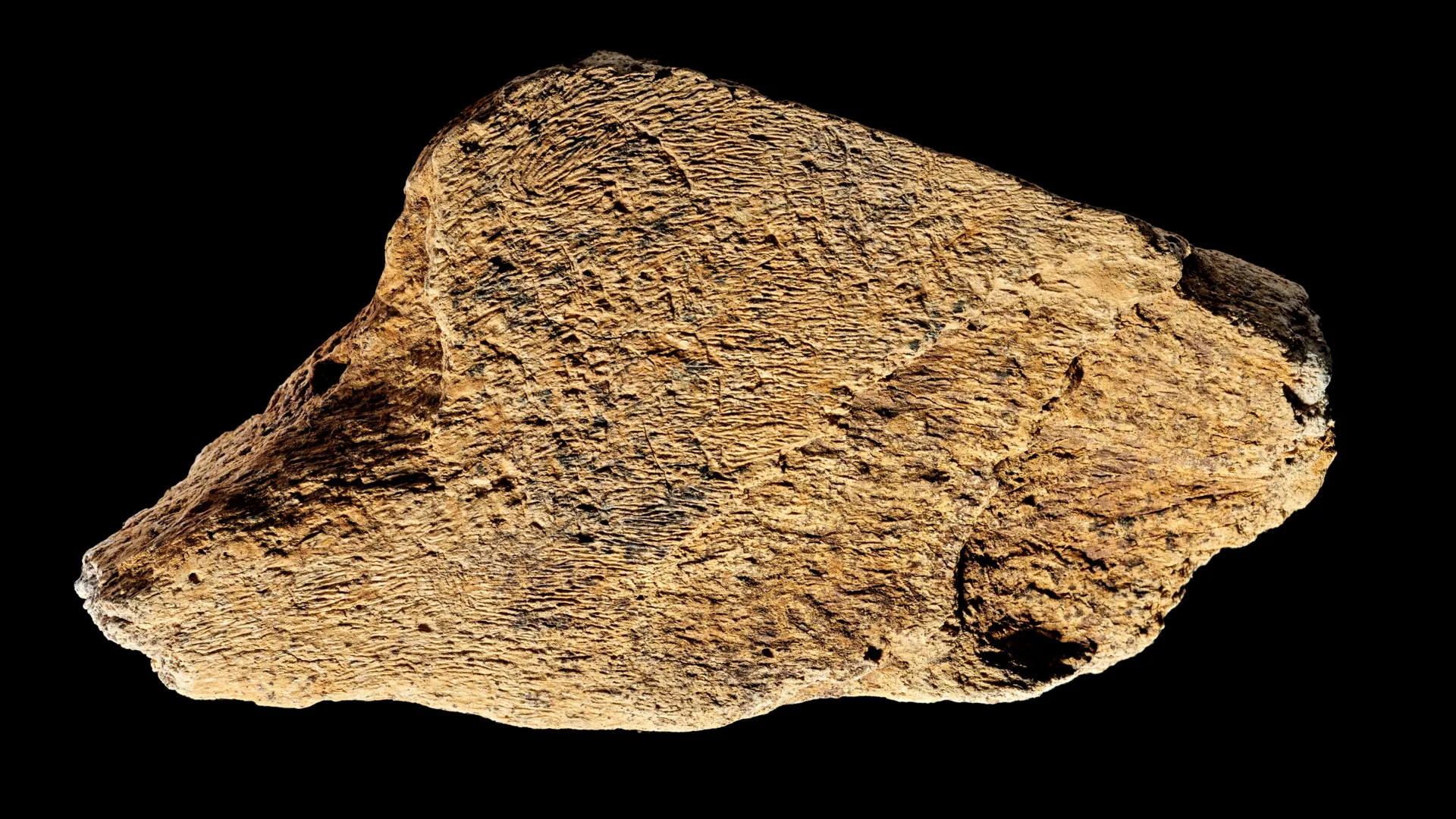
Researchers have identified a shaped elephant or mammoth bone fragment from Boxgrove in southern England as a reusable tool for retouching stone handaxes. The artifact, analyzed with 3D scanning and microscopy, is described as the oldest known elephant-bone tool in Europe.

Read story
Hidden Charcoal Dates Font-de-Gaume Cave Paintings in France
03
Archaeological Science
Score 55

Hidden Charcoal Dates Font-de-Gaume Cave Paintings in France

Chemical imaging has revealed charcoal within black pigments at France’s Font-de-Gaume cave, making direct radiocarbon dating possible. The results date a bison to 13,461–13,162 calBP and suggest that different parts of a mask-like figure were created during several widely separated periods.

Read story
Bronze-Casting Mould and Weapons Found at Tatarstan Pyanobor Site
04
Excavations
Score 20

Bronze-Casting Mould and Weapons Found at Tatarstan Pyanobor Site

Excavations at the Kipchak Archaeological Complex in Russia’s Tatarstan have yielded a bronze-casting mould, bronze and iron arrowheads, a spearhead, jewellery and decorated pottery. Kazan Federal University archaeologists say the finds may help investigate the debated origins of the Pyanobor culture.

Read story
Villa Complex and 84-Square-Metre Mosaic Found in Eastern Türkiye
05
Excavations
Score 20

Villa Complex and 84-Square-Metre Mosaic Found in Eastern Türkiye

A farmer’s discovery of mosaic remains in Salkaya village led to excavations revealing a settlement with a villa, bathhouse, church, grain-storage area and child’s grave. Archaeologists date the complex to the Late Roman and Early Byzantine periods, but its original owner remains unknown.

Read story
4,000-Year-Old Geometric Tablet Found at Lake Garda Settlement
06
Excavations
Score 20

4,000-Year-Old Geometric Tablet Found at Lake Garda Settlement

Archaeologists excavating the Early Bronze Age settlement of Lucone D near Italy’s Lake Garda have recovered a clay tablet marked with geometric designs. It is the 21st enigmatic tablet found across the wider Lucone site, but the purpose and meaning of the markings remain unknown.

Read story