Archaeology.Today
Field Report

Hidden Charcoal Dates Font-de-Gaume Cave Paintings in France

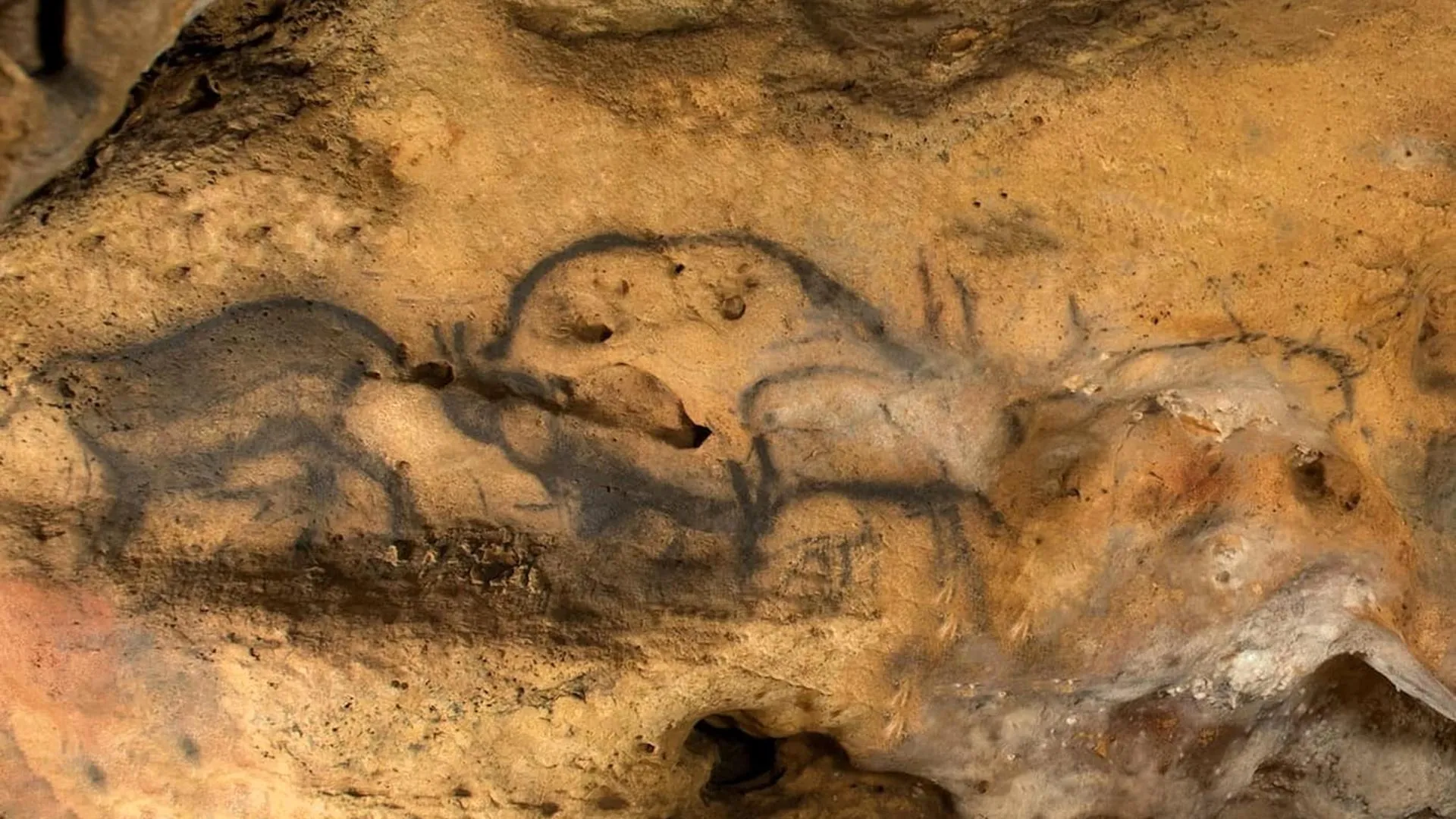
Chemical imaging has revealed charcoal within black pigments at France’s Font-de-Gaume cave, making direct radiocarbon dating possible. The results date a bison to 13,461–13,162 calBP and suggest that different parts of a mask-like figure were created during several widely separated periods.

September 8, 2026
1 Source
Font-de-Gaume Cave
Hidden Charcoal Dates Font-de-Gaume Cave Paintings in France
The Story

Researchers have directly dated two black figures at Font-de-Gaume, a decorated cave near Les Eyzies in France’s Dordogne region, after finding previously overlooked charcoal within their pigments. The results provide firm dates for a bison and suggest that a mask-like figure was produced or modified during multiple episodes separated by thousands of years.

The study, published in PNAS and reported by ScienceDaily from materials provided by CNRS, challenges the assumption that the cave’s black paintings were made solely from mineral pigments. Iron and manganese oxides can create dark colors but generally contain no carbon, making them unsuitable for radiocarbon dating. Until now, researchers had not conclusively established that the paintings lacked organic carbon.

To investigate, the team examined the bison and mask-like figure using Raman microspectrometry and hyperspectral imaging. These methods identify materials through their chemical and optical properties while causing little noticeable damage to the artwork. Both detected charcoal distributed throughout the figures’ black lines. Researchers said this pattern indicated that the carbon was part of the original pigment rather than later contamination from graffiti, visitors or tourism.

With special authorization, the scientists removed extremely small samples for carbon-14 analysis. The bison was dated to between 13,461 and 13,162 calibrated years before present, or calBP. In this dating system, the reference point is conventionally 1950, and radiocarbon results are calibrated to account for changes in atmospheric carbon-14 over time. The new result places the bison somewhat later than earlier estimates and assigns it to the Upper Paleolithic.

Samples from different parts of the mask-like figure produced three ranges: 8,993–8,590 calBP, 15,981–15,121 calBP, and 15,297–14,246 calBP. These results suggest that the figure may combine elements made at substantially different times rather than representing a single artistic episode.

The research was led by a scientist from Chimie ParisTech-PSL/CNRS/Ministère de la Culture and involved specialists from several French scientific and cultural institutions. The team said that combining chemical imaging with sensitive radiocarbon measurements could help date other prehistoric figures previously considered impossible to analyze directly. Such dates may allow researchers to compare painting episodes and investigate whether decorated caves were revisited and altered by later communities.

Reference Desk

Sources & Further Reading

Continue Exploring

Related Archaeology

More stories
Ancient DNA Tracks Population Replacement at French Megalithic Tomb
01
Bioarchaeology
Score 85

Ancient DNA Tracks Population Replacement at French Megalithic Tomb

DNA from 132 people buried at a megalithic tomb near Bury, north of Paris, indicates a sharp population break around 3000 BC. Researchers found evidence of disease and severe mortality, but say the collapse likely resulted from several interacting pressures rather than plague alone.

Read story
Excavation in Tonnerre Reveals 1,500 Years of Hilltop Settlement
02
Excavations
Score 65

Excavation in Tonnerre Reveals 1,500 Years of Hilltop Settlement

An Inrap excavation on Montbellant hill in northern France has uncovered medieval buildings, Roman-period remains and evidence of a first-century BC Gallic oppidum. The layered site, investigated ahead of house construction, is helping archaeologists trace the development of Tonnerre’s upper town.

Read story
Excavations Recast the Date of Galich’s Lost Lower Fortress
03
Archaeological Science
Score 40

Excavations Recast the Date of Galich’s Lost Lower Fortress

LiDAR mapping and 2026 excavations at Galich’s Lower Settlement found defensive earthworks and artifacts mainly dating to the 14th and 15th centuries. The evidence challenges its traditional identification as a 12th-century fortress and points instead to construction around the mid-15th century, possibly amid a dynastic conflict.

Read story
Ancient DNA Traces Family and Sacrifice at China’s Shimao Settlement
04
Bioarchaeology
Score 40

Ancient DNA Traces Family and Sacrifice at China’s Shimao Settlement

A 13-year study of ancient DNA from Shimao and nearby sites finds that the settlement’s population was largely descended from local Yellow River farming communities, while also showing connections across northern, central and southern China. The analysis offers new evidence about kinship, social hierarchy and human sacrifice.

Read story
Neanderthal DNA Pattern Does Not Prove Prehistoric Romance
05
Human Origins
Score 30

Neanderthal DNA Pattern Does Not Prove Prehistoric Romance

An analysis of Neanderthal ancestry on the X chromosome has been interpreted as potentially consistent with partner preference, but the genetic pattern may also reflect biology, migration or social organization. Evidence from Neanderthal sites in Spain and Belgium points to more complex possibilities.

Read story
Archaeologists Begin New Survey of the 1410 Grunwald Battlefield
06
Discoveries
Score 20

Archaeologists Begin New Survey of the 1410 Grunwald Battlefield

About 40 archaeologists, metal detectorists and museum specialists are surveying previously unexamined areas of Poland’s Grunwald battlefield. The work aims to refine the map of fighting between Polish-Lithuanian forces and the Teutonic Order, building on systematic research conducted since 2014.

Read story