
Archaeology.Today
Field Report

Bronze Age Wooden Spade Found at Arne Moors in Britain

A wooden spade recovered from waterlogged ground near Poole Harbour has been radiocarbon dated to about 3,500–3,400 years ago. Archaeologists say the unusually complete oak tool offers evidence of how people used a seasonally flooded landscape during the Middle Bronze Age.

September 8, 2026
1 Source
Arne Moors
Bronze Age Wooden Spade Found at Arne Moors in Britain
The Story

Archaeologists have uncovered a remarkably well-preserved wooden spade during excavations at Arne Moors, on the edge of Poole Harbour in Britain. Radiocarbon dating of the oak places the tool at approximately 3,500–3,400 years old, making it one of the oldest and most complete wooden tools discovered in the country.

The excavation was conducted by Wessex Archaeology for The Moors at Arne project, an environmental scheme being delivered by Kier for the Environment Agency and its partners, the RSPB and Natural England. The project is converting more than 150 hectares into wetland habitat.

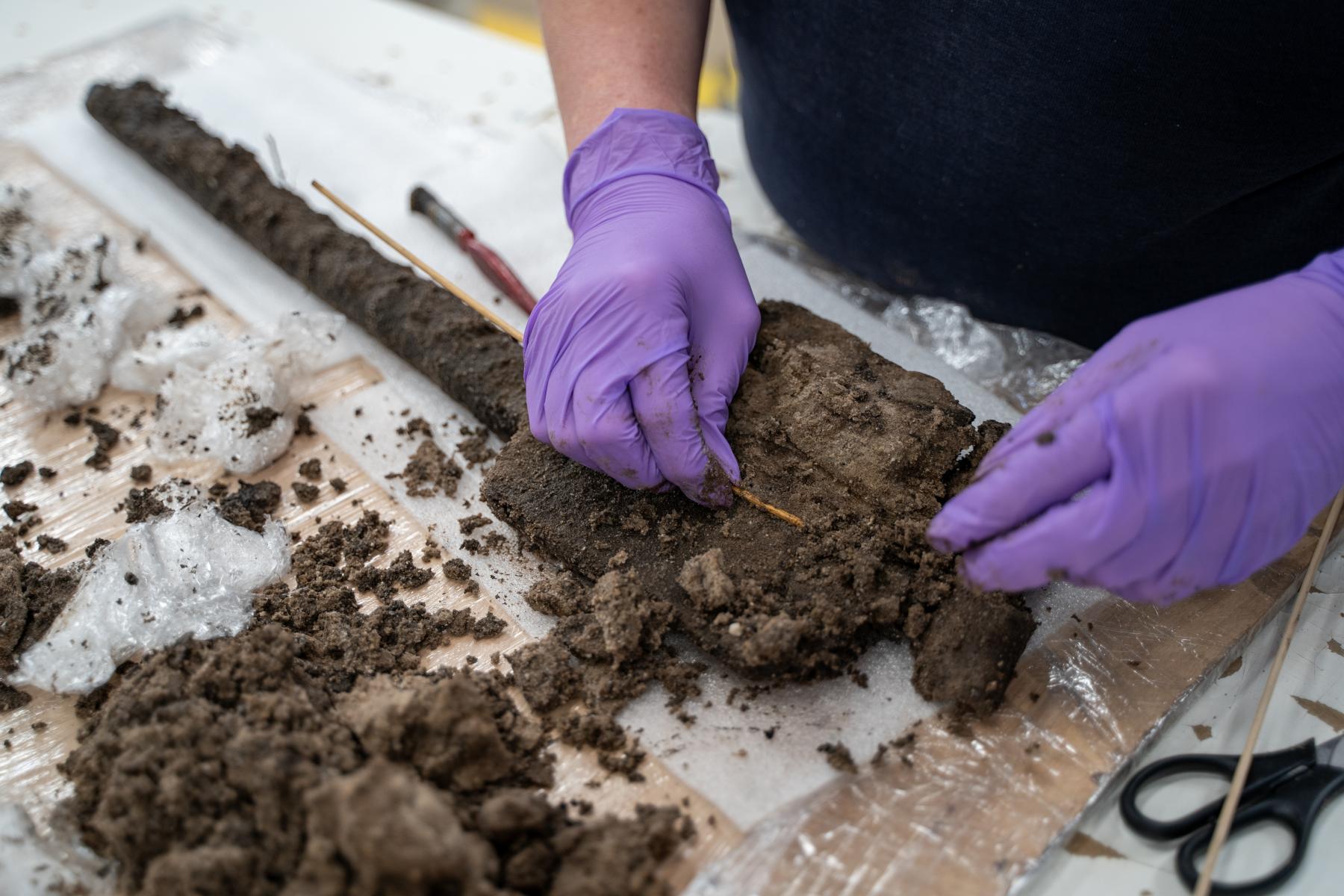
The spade survived because it was preserved in waterlogged ground, where organic materials such as wood can remain intact for long periods under exceptional conditions. It was shaped from a single piece of oak. According to Wessex Archaeology, producing the tool would have required substantial manual work, potentially making it valuable enough to repair, reuse or reshape if damaged.

The object was found in a circular ditch. Archaeologists have not established the ditch’s precise function, but it may have been used to dry or protect resources. There is little evidence for a permanent settlement at the location, and researchers are considering whether people visited the area seasonally instead.

During the Middle Bronze Age, the Arne Moors would have been prone to winter flooding before drying during the summer. The landscape may have supported activities including peat cutting and drying, animal grazing, hunting, fishing, gathering rushes for thatch and basketry, and possibly crop cultivation. Researchers are continuing to investigate the relationship between the spade and the ditch.

Edward Treasure, Wessex Archaeology’s environmental archaeologist, said analysis of the tool was beginning to reveal how it was made and used. Greg Chuter, the Environment Agency archaeologist leading the programme, described the find as evidence of how people adapted to the area’s environmental challenges over more than 3,000 years.

Wessex Archaeology said only one other similar Bronze Age wooden tool has been recovered in Britain: a long, leaf-shaped object found during excavations at an ancient mine in Cheshire in 1875 and later called the “Brynlow Shovel.” Further research may clarify how the two tools compare and what roles such wooden implements played.


Reference Desk

Sources & Further Reading

Continue Exploring

Related Archaeology

More stories
Two Foals Buried Beside a Bronze Age Mound in Germany
01
Archaeological Science
Score 40

Two Foals Buried Beside a Bronze Age Mound in Germany

Excavations at Nauendorf in Saxony-Anhalt have uncovered two foal burials associated with a Late Bronze Age burial monument. Radiocarbon dates place both animals between roughly 1212 and 1052 BC, offering rare evidence of young horses being deliberately buried in a funerary context.

Read story
Ancient DNA Links Plague to Deaths 5,500 Years Ago in Siberia
02
Bioarchaeology
Score 40

Ancient DNA Links Plague to Deaths 5,500 Years Ago in Siberia

Ancient DNA from hunter-gatherer cemeteries near Lake Baikal has revealed Yersinia pestis in 18 of 46 individuals studied. Researchers say the evidence, combined with radiocarbon dating and burial patterns, indicates that early plague strains could be highly lethal before the emergence of cities and flea-borne transmission.

Read story
Excavations Recast the Date of Galich’s Lost Lower Fortress
03
Archaeological Science
Score 40

Excavations Recast the Date of Galich’s Lost Lower Fortress

LiDAR mapping and 2026 excavations at Galich’s Lower Settlement found defensive earthworks and artifacts mainly dating to the 14th and 15th centuries. The evidence challenges its traditional identification as a 12th-century fortress and points instead to construction around the mid-15th century, possibly amid a dynastic conflict.

Read story
Ancient DNA Tracks Population Replacement at French Megalithic Tomb
04
Bioarchaeology
Score 40

Ancient DNA Tracks Population Replacement at French Megalithic Tomb

DNA from 132 people buried at a megalithic tomb near Bury, north of Paris, indicates a sharp population break around 3000 BC. Researchers found evidence of disease and severe mortality, but say the collapse likely resulted from several interacting pressures rather than plague alone.

Read story
Bronze-Casting Mould and Weapons Found at Tatarstan Pyanobor Site
05
Excavations
Score 20

Bronze-Casting Mould and Weapons Found at Tatarstan Pyanobor Site

Excavations at the Kipchak Archaeological Complex in Russia’s Tatarstan have yielded a bronze-casting mould, bronze and iron arrowheads, a spearhead, jewellery and decorated pottery. Kazan Federal University archaeologists say the finds may help investigate the debated origins of the Pyanobor culture.

Read story
Villa Complex and 84-Square-Metre Mosaic Found in Eastern Türkiye
06
Excavations
Score 20

Villa Complex and 84-Square-Metre Mosaic Found in Eastern Türkiye

A farmer’s discovery of mosaic remains in Salkaya village led to excavations revealing a settlement with a villa, bathhouse, church, grain-storage area and child’s grave. Archaeologists date the complex to the Late Roman and Early Byzantine periods, but its original owner remains unknown.

Read story