
Archaeology.Today
Field Report

Two Foals Buried Beside a Bronze Age Mound in Germany

Excavations at Nauendorf in Saxony-Anhalt have uncovered two foal burials associated with a Late Bronze Age burial monument. Radiocarbon dates place both animals between roughly 1212 and 1052 BC, offering rare evidence of young horses being deliberately buried in a funerary context.

September 8, 2026
1 Source
Nauendorf
Two Foals Buried Beside a Bronze Age Mound in Germany
The Story

Archaeologists investigating a construction corridor in Nauendorf, Saxony-Anhalt, have found the remains of two foals buried beside a Late Bronze Age burial mound. The discovery was made during work ahead of construction of the SuedOstLink electricity transmission line.

The excavations revealed part of a settlement landscape dating from the Late Bronze Age and Iron Age, with traces of houses, storage and oven pits, ditches, and a burial ground. Although the mound itself had disappeared from the flat landscape, its circular surrounding ditch survived, along with an earthen entrance or bridge on the eastern side.

Within the enclosure were two west–east-oriented graves lined with stone. Both had been robbed in antiquity, leaving only fragments of bronze pins, a small bronze ring, and pieces of a pottery vessel. Investigators then examined a deeper pit cut into the south-eastern section of the ditch. Instead of the secondary human burial that such features can contain, they found a horse skeleton lying on its right side. Expanding the excavation revealed a second nearby horse burial.

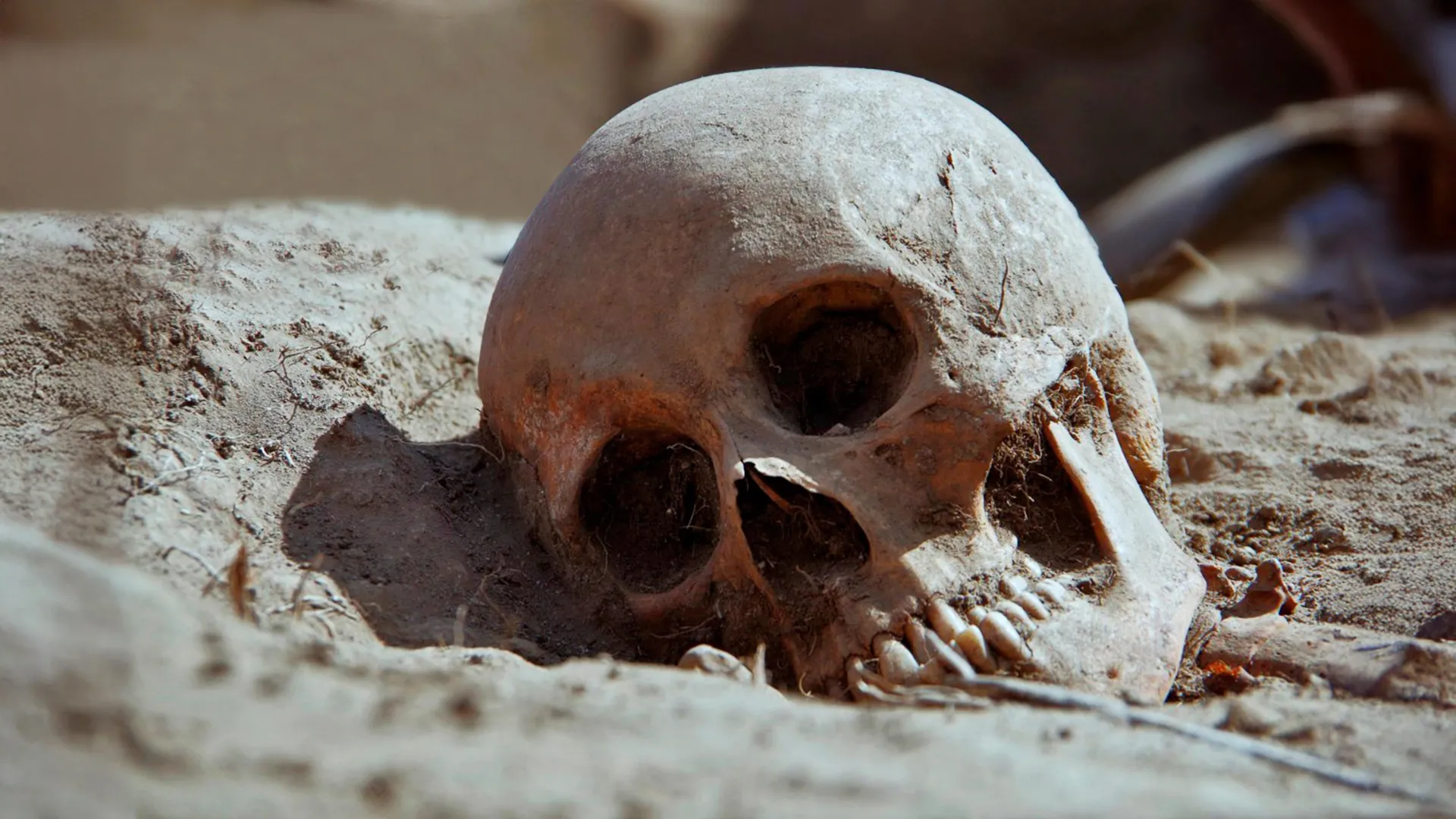
Both animals had been placed on their sides with their limbs naturally bent. One lay directly in the mound’s surrounding ditch, while the other was buried a short distance away and aligned in the same direction as the stone-lined graves. The foals were approximately five to nine months old. Their skulls and long limb bones survived most clearly, while the arrangement of the remains indicates that complete carcasses—not selected body parts—had originally been placed in the pits.

The hind legs of one animal were almost parallel. Archaeologists said this may indicate that its body had been constricted or bound around the hindquarters before burial, although the evidence does not establish how this was done.

Radiocarbon dating placed the two deposits in approximately the same period: one dates to 1212–1055 BC and the other to 1211–1052 BC. Both belong to the beginning of the Late Bronze Age.

According to the excavation reporting, complete horse burials from this period are exceptionally rare, despite other horse remains being known from prehistoric funerary sites in Saxony-Anhalt. The young age of the animals is especially significant because sacrificing them so soon after birth meant giving up years of potential economic value. Archaeologists suggest that the burials may reflect the importance of the funerary ceremony and possibly the elevated status of the people originally buried beneath the mound.

Reference Desk

Sources & Further Reading

Continue Exploring

Related Archaeology

More stories
Medieval Deserted Settlement Revealed at Halberstadt Development Site
01
Discoveries
Score 110

Medieval Deserted Settlement Revealed at Halberstadt Development Site

Excavations at Am Frevelgraben, on the eastern edge of Halberstadt in Saxony-Anhalt, have exposed rows of sunken buildings, wells and changing ditch boundaries. The settlement appears to have been abandoned in an unusually orderly way, with residents taking most of their possessions when they left.

Read story
Ancient DNA Links Plague to Deaths 5,500 Years Ago in Siberia
02
Bioarchaeology
Score 40

Ancient DNA Links Plague to Deaths 5,500 Years Ago in Siberia

Ancient DNA from hunter-gatherer cemeteries near Lake Baikal has revealed Yersinia pestis in 18 of 46 individuals studied. Researchers say the evidence, combined with radiocarbon dating and burial patterns, indicates that early plague strains could be highly lethal before the emergence of cities and flea-borne transmission.

Read story
Excavations Recast the Date of Galich’s Lost Lower Fortress
03
Archaeological Science
Score 40

Excavations Recast the Date of Galich’s Lost Lower Fortress

LiDAR mapping and 2026 excavations at Galich’s Lower Settlement found defensive earthworks and artifacts mainly dating to the 14th and 15th centuries. The evidence challenges its traditional identification as a 12th-century fortress and points instead to construction around the mid-15th century, possibly amid a dynastic conflict.

Read story
Ancient DNA Tracks Population Replacement at French Megalithic Tomb
04
Bioarchaeology
Score 40

Ancient DNA Tracks Population Replacement at French Megalithic Tomb

DNA from 132 people buried at a megalithic tomb near Bury, north of Paris, indicates a sharp population break around 3000 BC. Researchers found evidence of disease and severe mortality, but say the collapse likely resulted from several interacting pressures rather than plague alone.

Read story
Bronze-Casting Mould and Weapons Found at Tatarstan Pyanobor Site
05
Excavations
Score 20

Bronze-Casting Mould and Weapons Found at Tatarstan Pyanobor Site

Excavations at the Kipchak Archaeological Complex in Russia’s Tatarstan have yielded a bronze-casting mould, bronze and iron arrowheads, a spearhead, jewellery and decorated pottery. Kazan Federal University archaeologists say the finds may help investigate the debated origins of the Pyanobor culture.

Read story
Villa Complex and 84-Square-Metre Mosaic Found in Eastern Türkiye
06
Excavations
Score 20

Villa Complex and 84-Square-Metre Mosaic Found in Eastern Türkiye

A farmer’s discovery of mosaic remains in Salkaya village led to excavations revealing a settlement with a villa, bathhouse, church, grain-storage area and child’s grave. Archaeologists date the complex to the Late Roman and Early Byzantine periods, but its original owner remains unknown.

Read story