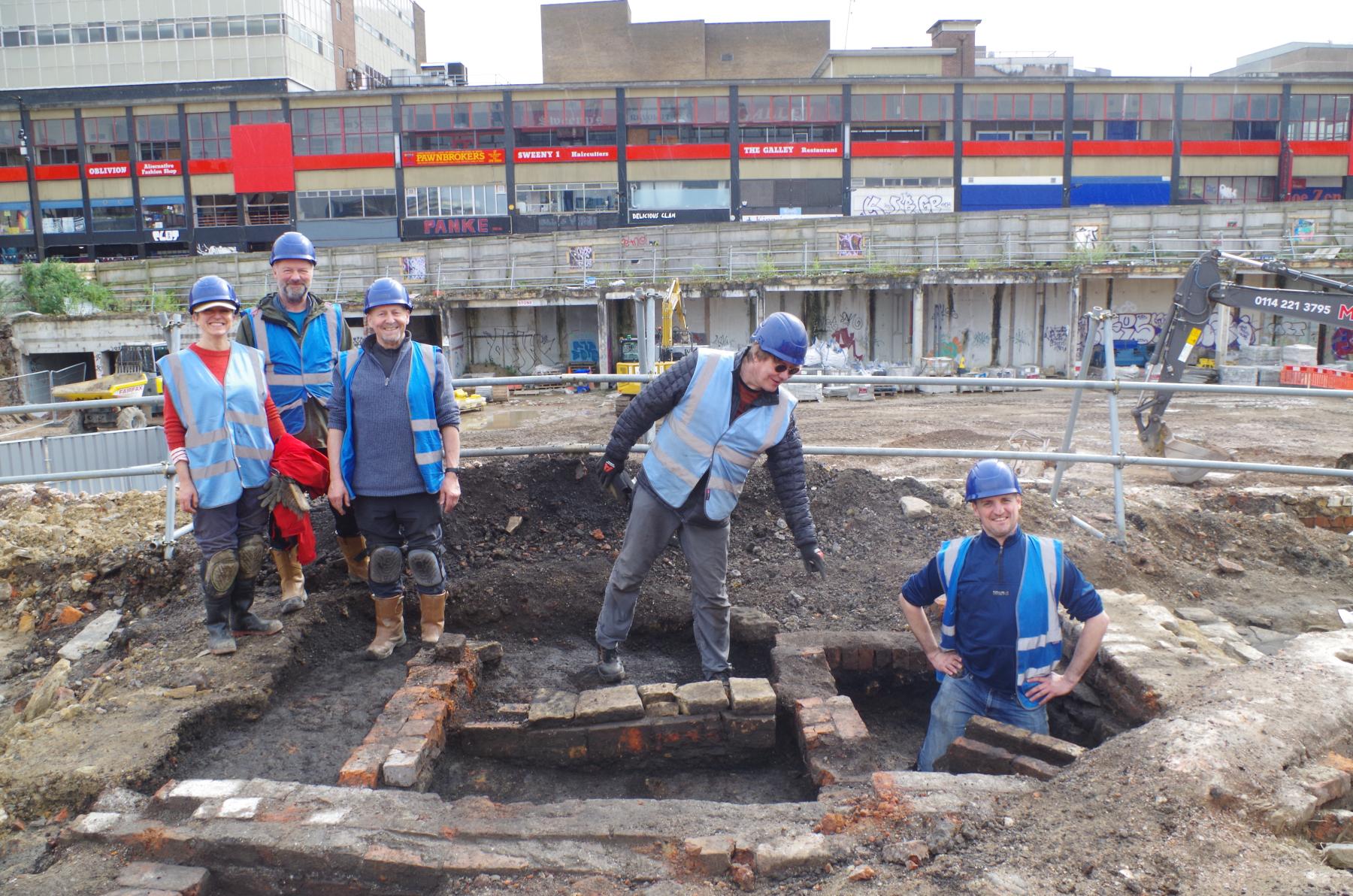
A community excavation at Sheffield Castle has uncovered part of the castle’s sandstone structure beneath remains associated with later industrial development. The discovery came during a 10-week public archaeology programme organized with excavation sessions and guided site tours.
Participants initially worked through features linked to the 19th-century Castle Hill Steel Works, which had been constructed over the motte. With guidance from archaeologist Viktoría Halldórsdóttir and Engagement and Inclusion Officer Natasha Bramall, they recorded structures, examined brickwork and considered how different building phases related to one another.
One participant, Roger, described helping establish when a stone wall had been built. The wall rested on clay over the motte’s loose stone, while a brick fragment in its mortar indicated that it was a later addition, according to his account published by Wessex Archaeology.
The project team also hoped to locate surviving evidence of the castle beneath the complex layers of later construction. As excavation continued, participants began finding more sandstone. In the seventh week, the team said it could identify the remains as part of Sheffield Castle.
The exposed castle wall lies between later brick walls and has been cut by a modern drain. Community members used hand tools to carefully reveal the structure and took part in recording and interpreting the features under the direction of the archaeological team.
The public programme offered one-, two- and three-day excavation passes, with five places available each day. Wessex Archaeology said the spaces were quickly filled, making the work a collective effort involving local residents as well as professional staff.
At the time of the report, three weeks remained in the excavation. Further work was expected to investigate more of the site’s archaeological remains, although the material published by Wessex Archaeology did not provide a final account of the excavation’s results.