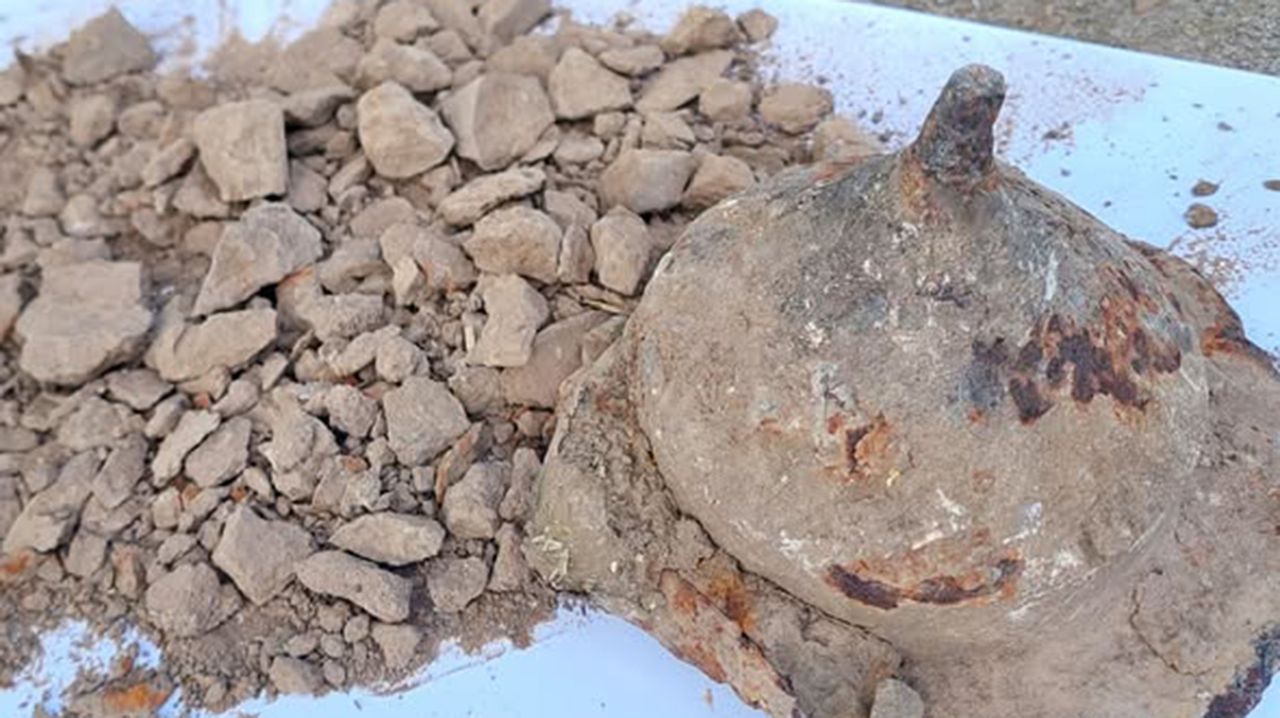

Archaeologists have identified 12 wallaby teeth mounted with plant resin at Windmill Way, a rock shelter in Quinkan Country, Queensland. The ornaments date to roughly 1,200 years ago and represent the first known example of this type from Cape York Peninsula, according to research published in Australian Archaeology.
The first tooth was noticed while archaeologist Lynley Wallis of Griffith University was sorting animal bones from the shelter. A dark, glue-like substance attached to the tooth’s root led the team to examine the material more closely. Eleven additional teeth bearing similar resin were subsequently recovered.
Windmill Way contains more than 500 pieces of plant-fiber string, as well as ocher, worked wood, shell and thousands of gnawed animal bones. The abundance of bones initially raised the possibility that the shelter had been used by dingoes. The resin-mounted teeth added evidence for another kind of activity at the site.
Researchers worked with Elders and Rangers from the Laura community to identify plants that could have supplied the resin. They then analyzed samples using infrared spectroscopy and liquid chromatography-mass spectrometry. The results indicated that all 12 teeth had been mounted with gum from grass trees, which grow on the rocky slopes around the shelter. One tooth also retained traces of gum from ironwoods found near waterways.
The teeth showed no evidence of having been used as chisels or drills, tools that can be made from kangaroo and wallaby teeth in the region. Instead, plant fibers and a fragment of animal hide remained attached to some of the resin. These traces led the researchers to suggest that the teeth may once have been strung into a necklace or headband, with the resin serving as a stopper to keep them in place.
Tooth ornaments are known from other parts of Australia, but they are most often recovered from burials. Cape York Peninsula had not previously produced an animal-tooth ornament despite decades of research. The authors therefore described the Windmill Way assemblage as rare, while noting that it remains uncertain how widespread this form of jewelry was in the region.
The researchers also located one wallaby-tooth necklace in the Pitt Rivers Museum in Oxford, but its records identify only “Australia” as its origin. The Windmill Way finds provide archaeological evidence that resin was used to mount wallaby teeth in Cape York Peninsula, while their possible use as personal ornaments remains an interpretation rather than a confirmed function.