
Archaeology.Today
Field Report

Polish Junkyard Find May Be Part of a Vandal Warrior’s Cremation Burial

A man searching for car parts near Hrubieszów found an iron shield boss estimated to be about 1,800 years old. Examination of earth trapped inside revealed cremated bones, leading archaeologists to identify the object as a possible remnant of a Vandal warrior’s burial.

September 1, 2026
1 Source
Polish Junkyard Find May Be Part of a Vandal Warrior’s Cremation Burial
The Story

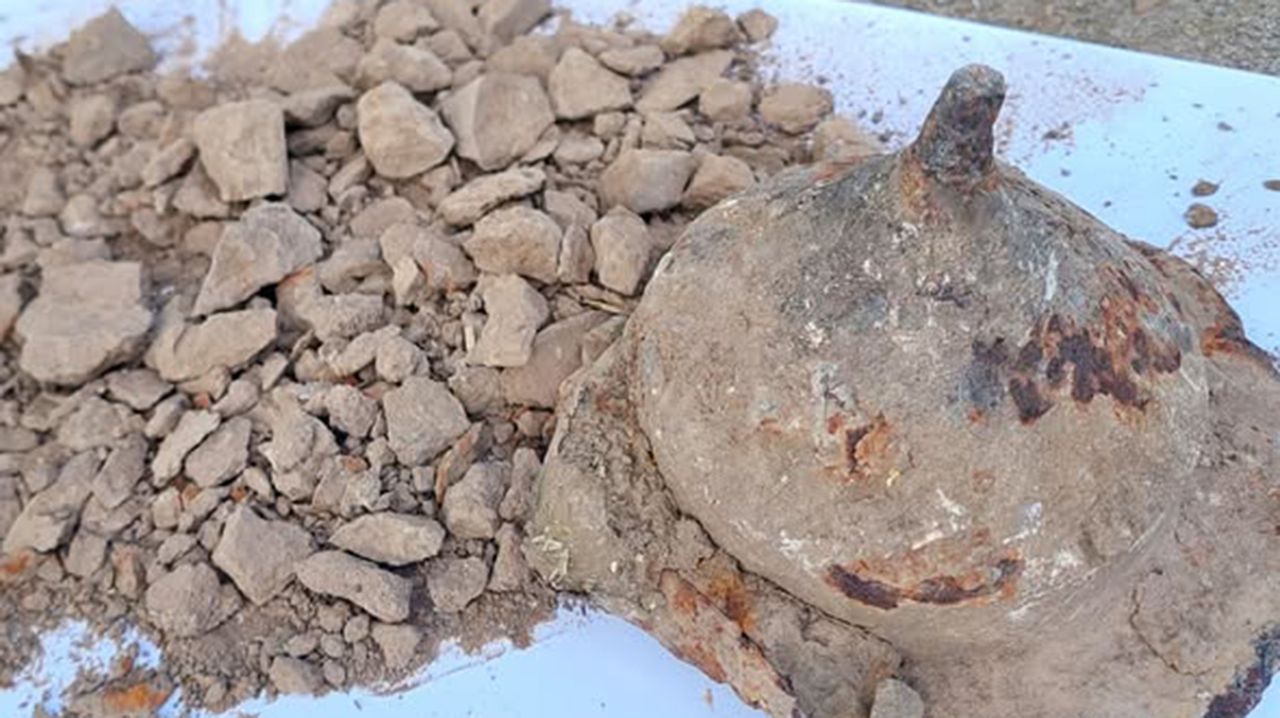
An iron shield boss discovered in a junkyard in southeastern Poland contained cremated bones, according to archaeologists at the Father Stanisław Staszic Museum in Hrubieszów. The find may be part of a Vandal warrior’s burial dating to the second century, although the original grave has been destroyed or lost.

The artifact was found earlier this month by a man searching for spare automobile parts at a junkyard in Hrubieszów, near Poland’s border with Ukraine. After recognizing that the object might be ancient, he sent a photograph to the museum. Archaeologists subsequently examined the find and identified it as the central iron fitting of a shield, known as a boss or umbo.

A shield boss protected the hand and supported the wooden and leather components of the shield. Those organic parts have decayed, leaving only the iron central section. A plug of dried earth inside the boss was found to contain cremated bone fragments.

The museum said the boss’s preservation and distinctive surface indicate that it had been exposed to high temperatures. Combined with the burned bones, this evidence led the archaeologists to conclude that the object was associated with a cremation burial of a warrior from the Vandal community.

The identification remains an archaeological interpretation rather than a recovery from an intact grave. The find’s location, its pointed form and the second-century dating are consistent with a Vandal origin, according to the reporting. The source also notes that the Romans used shield bosses, but archaeologists do not believe Roman legionaries reached this part of Poland.

The Vandals were a Germanic people associated in Poland with the Przeworsk culture. Their burial customs included cremation. However, because the original burial site has been disturbed, researchers cannot determine what other objects may have accompanied the deceased. Possible missing items include a sword, spearheads, javelins, a belt buckle or a cloak clasp, according to the museum team.

The discovery therefore preserves only a small part of a burial assemblage: an iron shield fitting and the cremated remains held within its earth-filled interior. The rest of the grave’s contents, if any survived, are no longer known.

Reference Desk

Sources & Further Reading

Continue Exploring

Related Archaeology

More stories
Study Examines Unusual 17th-Century Burial in Pień, Poland
01
Discoveries
Score 65

Study Examines Unusual 17th-Century Burial in Pień, Poland

A multidisciplinary study of Grave 75 at a cemetery in Pień examines the remains of a woman who died at about 17–19 years old. A sickle placed across her neck and a padlock fixed to her toe suggest measures intended to prevent the dead from returning, although researchers frame the burial within historical beliefs and social fears.

Read story
LiDAR Study Finds Ancient Maya Land Use Still Shapes Belize Forests
02
Archaeological Science
Score 20

LiDAR Study Finds Ancient Maya Land Use Still Shapes Belize Forests

A study of LiDAR data from northern Belize has identified links between forest structure and ancient Maya canals, settlements, buildings, and upland walls. The strongest relationship appeared around former wetland agricultural fields, although researchers say broader surveys are needed to determine how widely the pattern extends.

Read story
Wallaby-Tooth Ornaments Identified at Queensland Rock Shelter
03
Discoveries
Score 20

Wallaby-Tooth Ornaments Identified at Queensland Rock Shelter

Twelve wallaby teeth found at Windmill Way in Queensland were mounted with plant resin, indicating they may once have formed part of a necklace or headband. The assemblage is described as the first such find from Cape York Peninsula and the only known example of this type found outside burials in northeastern Australia.

Read story
Fragments Reveal Previously Unknown Fourth-Century Roman Law Book
04
Artifacts
Score 20

Fragments Reveal Previously Unknown Fourth-Century Roman Law Book

A University of Cincinnati scholar and the Penn Museum have joined 50 animal-skin fragments into a double-sided page from a late-fourth-century Roman legal text. The Latin manuscript discusses taxation and public infrastructure but does not match any previously known imperial legal code.

Read story
Medieval Manuscript Fragments Illuminate Guernsey’s Literary Past
05
Artifacts
Score 20

Medieval Manuscript Fragments Illuminate Guernsey’s Literary Past

Seventeen fragments reused in early modern administrative bindings provide the first substantial evidence of medieval books and reading on Guernsey. Six are written in French, including a rare passage from a dramatic Griselda poem that survives in only one other manuscript.

Read story
Historic Sulfur Emissions Linked to Porosity in Murujuga Rock Art
06
Discoveries
Score 20

Historic Sulfur Emissions Linked to Porosity in Murujuga Rock Art

A three-year monitoring program in Western Australia identifies historic sulfur dioxide emissions and resulting acid rain as the strongest explanation for increased porosity in rock surfaces near industrial areas of Murujuga. Researchers say current pollution has not been shown to accelerate deterioration, while further work will examine microbial and atmospheric factors.

Read story