
Archaeology.Today
Field Report

Crucible Furnace Revealed in Excavation at Sheffield Castle Site

A 10-week excavation linked to Sheffield’s Castlegate regeneration project has uncovered an previously unmapped 19th-century crucible furnace on the castle mound. The structure, including ash pits and surviving steps, adds evidence for steel production at the former Castle Hill Steel Works.

September 8, 2026
1 Source
Castle Hill Steel Works
Crucible Furnace Revealed in Excavation at Sheffield Castle Site
The Story

Archaeologists excavating the site of Sheffield Castle have uncovered the remains of a 19th-century crucible furnace, revealing new evidence of steel production on the castle mound.

The 10-week excavation forms part of Sheffield City Council’s Castlegate regeneration project and is overseen by construction engineering specialists Keltbray. The work is also intended to uncover and preserve the castle’s medieval gatehouse. Archaeologists used an 1850s Ordnance Survey map and other research questions to guide their investigation of the site.

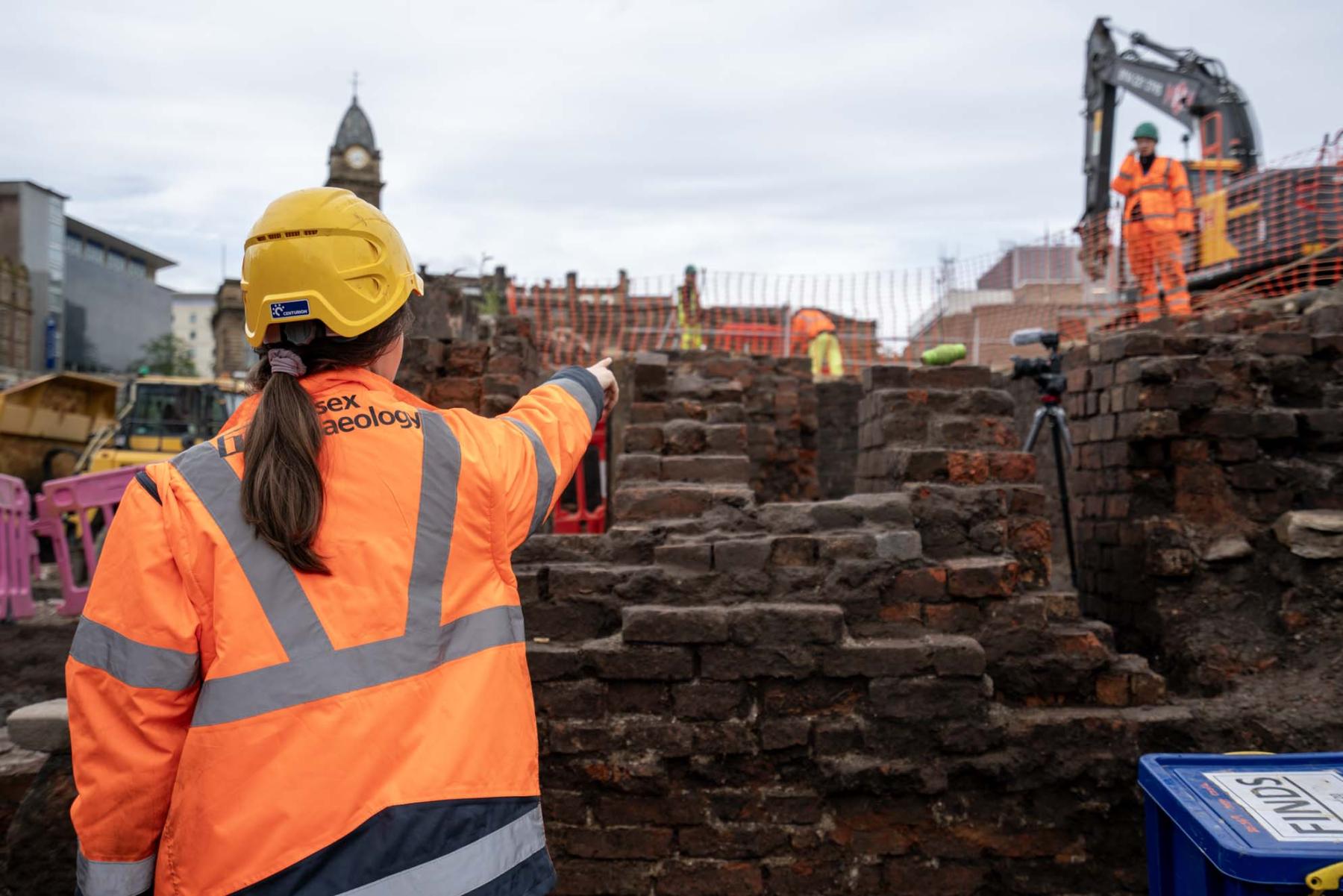
After removing modern concrete foundations associated with the former market and deposits of backfill, the team reached a 19th-century archaeological layer. Brick remains, including sections of a vaulted ceiling, led to the identification of a cellar containing a crucible furnace. Rows of brick bays beneath the furnace were interpreted as ash, or “rake out,” pits.

Crucible furnaces were used to refine blister steel into a higher-quality, more homogeneous form of crucible steel. The furnace would have reached temperatures of about 1,200 degrees Celsius and generated ash that had to be removed from the pits below. The excavation also exposed four curved steps descending into the cellar. Although the steps appear on the 1850s map, their surviving form was unexpected because the bottom had been bricked up.

The furnace itself was not shown on the maps consulted by the excavation team. Its discovery indicates that previously undocumented industrial remains survive beneath the castle mound.

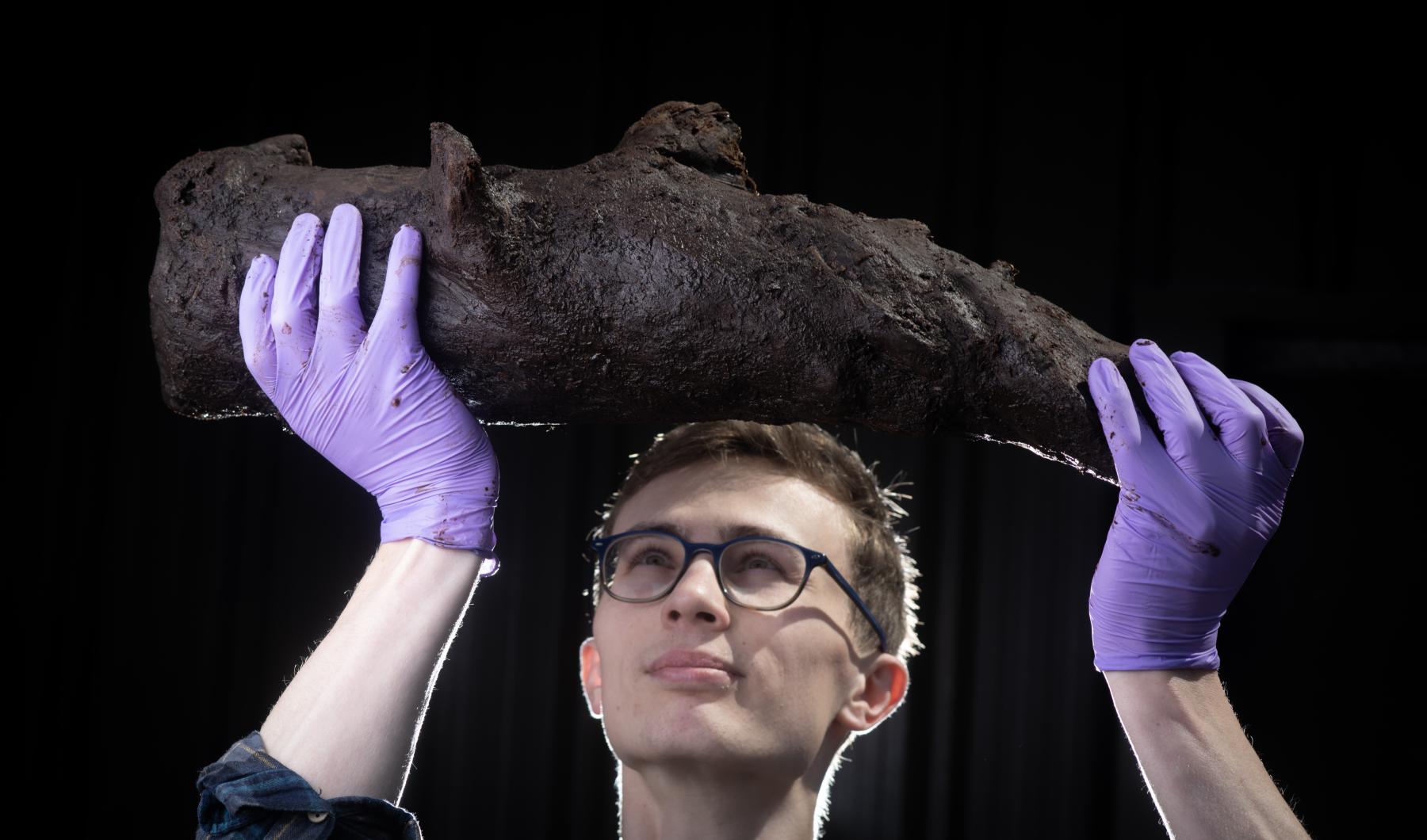
During a small deep trial trench through the cellar’s backfill, archaeologist Marijane Porter recorded layers containing waste from the firing process. Near the base of the furnace, the team found numerous pieces of ceramic fused together. A volunteer suggested they could relate to a vent or cowl, but the material has not yet been identified by finds specialists.

The discovery may also help clarify the workflow at the Castle Hill Steel Works. A 2018 trial trench evaluation found parts of a cementation furnace, which would have produced blister steel. The newly identified crucible furnace could therefore have been involved in a later stage of the same production process, although the relationship between the two structures remains an interpretation rather than a confirmed reconstruction.

Archaeologists are continuing to record the furnace before investigating deeper archaeological deposits at the site.
Reference Desk

Sources & Further Reading

Continue Exploring

Related Archaeology

More stories
Prehistoric Woodland and Insect Remains Found in Exmoor Peatland
01
Discoveries
Score 50

Prehistoric Woodland and Insect Remains Found in Exmoor Peatland

A peatland restoration project at the National Trust’s Holnicote Estate in Somerset has uncovered well-preserved woodland, plant and insect remains dating from the Neolithic and Bronze Ages. The evidence offers a record of wetland conditions and vegetation on Exmoor thousands of years ago.

Read story
Excavations Recast the Date of Galich’s Lost Lower Fortress
02
Archaeological Science
Score 40

Excavations Recast the Date of Galich’s Lost Lower Fortress

LiDAR mapping and 2026 excavations at Galich’s Lower Settlement found defensive earthworks and artifacts mainly dating to the 14th and 15th centuries. The evidence challenges its traditional identification as a 12th-century fortress and points instead to construction around the mid-15th century, possibly amid a dynastic conflict.

Read story
Excavations Trace Centuries of Change Along Side’s 390-Metre Street
03
Excavations
Score 40

Excavations Trace Centuries of Change Along Side’s 390-Metre Street

Archaeologists have completed work on Street B, a nearly 390-metre-long thoroughfare in the ancient city of Side in southern Turkey. The excavation documented a second-century AD colonnade, three monumental entrances and a fifth-century transformation linked to the city’s Bishop’s Palace complex.

Read story
Excavation in Tonnerre Reveals 1,500 Years of Hilltop Settlement
04
Excavations
Score 40

Excavation in Tonnerre Reveals 1,500 Years of Hilltop Settlement

An Inrap excavation on Montbellant hill in northern France has uncovered medieval buildings, Roman-period remains and evidence of a first-century BC Gallic oppidum. The layered site, investigated ahead of house construction, is helping archaeologists trace the development of Tonnerre’s upper town.

Read story
Excavations Reveal Early Christian Church Features at Tokod Fortress
05
Excavations
Score 40

Excavations Reveal Early Christian Church Features at Tokod Fortress

Archaeologists working at Hungary’s Tokod-Várberek site have uncovered a ciborium foundation, painted fresco fragments and a group of metal artefacts. The finds are helping clarify the layout and development of an early Christian church within the late Roman fortress.

Read story
Archaeologists Begin New Survey of the 1410 Grunwald Battlefield
06
Discoveries
Score 20

Archaeologists Begin New Survey of the 1410 Grunwald Battlefield

About 40 archaeologists, metal detectorists and museum specialists are surveying previously unexamined areas of Poland’s Grunwald battlefield. The work aims to refine the map of fighting between Polish-Lithuanian forces and the Teutonic Order, building on systematic research conducted since 2014.

Read story