Excavations at the former St Catherine’s Place shopping centre in Bedminster, Bristol, have revealed substantial remains of a water mill that operated for more than 170 years as the area developed from open fields into an expanding industrial and residential district.
Wessex Archaeology carried out the work in 2023 for Galliard Homes as part of the Land at St Catherine’s Bristol development. The site, between Dalby Avenue and East Street, contained surviving walls from the former Bedminster mill, which appeared on town maps until about 1885. Documentary evidence indicates that the mill was in place by 1712 and appears on all town plans from 1828.
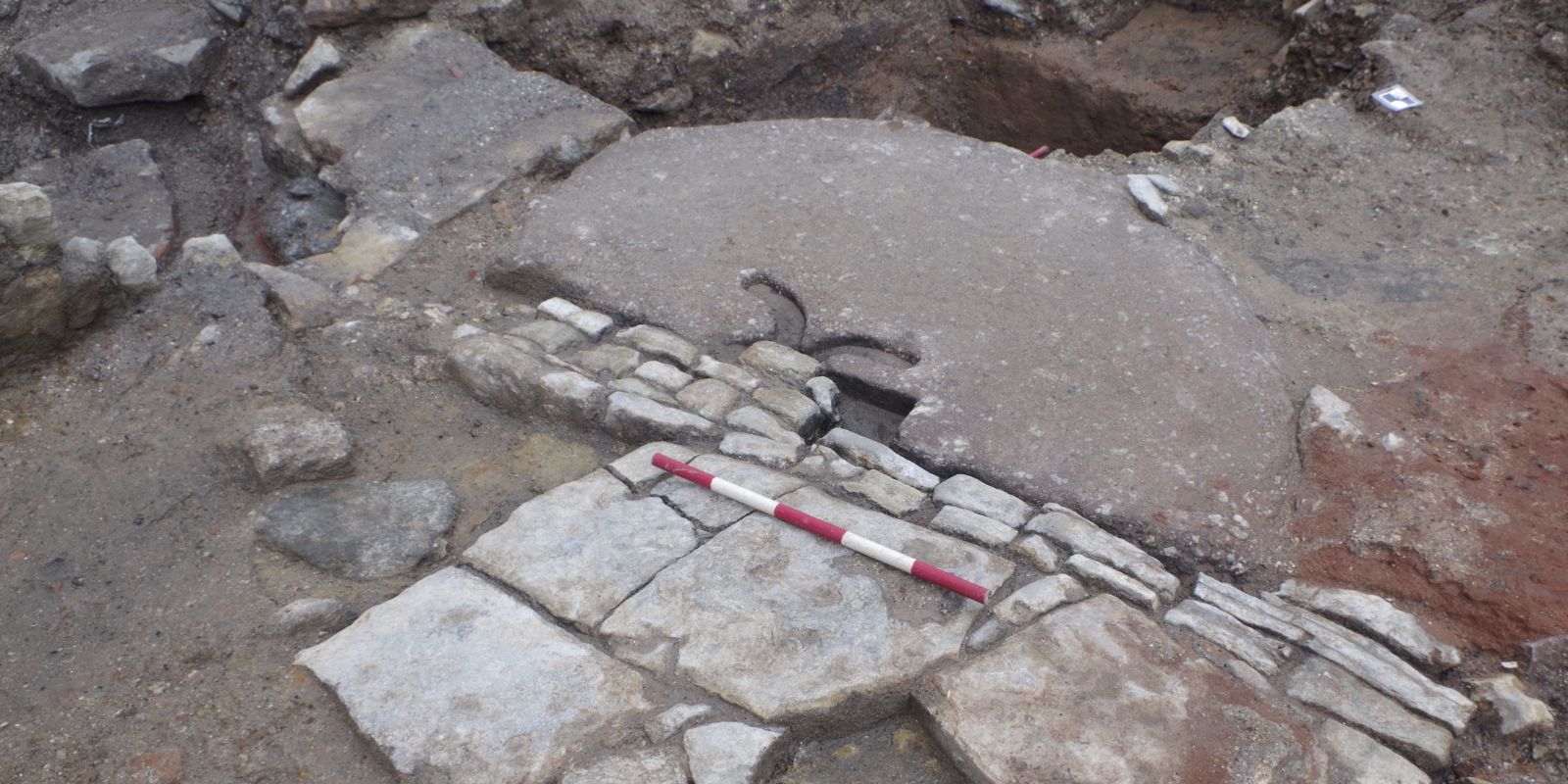
Unlike many former mills, where only the base of a wheel pit survives, the Bedminster site retained numerous walls and other structural remains. Excavators identified a curved stone-lined wheel pit that survived to considerable depth and across its full width. Its dimensions indicated the diameter of the water wheel, while scuff marks were consistent with repeated movement of the wheel in the same position.
The remains suggest that the mill’s power system changed over time. It initially used an undershot wheel, with water entering from below, before being modified for breast-shot operation and later for an overshot wheel, in which water arrived from above. Wessex Archaeology reports that the later arrangement provided greater power as increasing demand for drinking water and industry reduced the supply available from the River Malago. Documentary sources indicate that steam power was used toward the end of the mill’s operation, introducing the additional cost of fuel.
The team also found evidence of repeated rebuilding and repair, with walls replaced or constructed alongside earlier sections. The mill race used pooled water to feed the wheel, while nearby foundations traced buildings along Mill Lane. A cellar had been fitted into a narrow gap between properties, with brick steps cut into the bedrock.
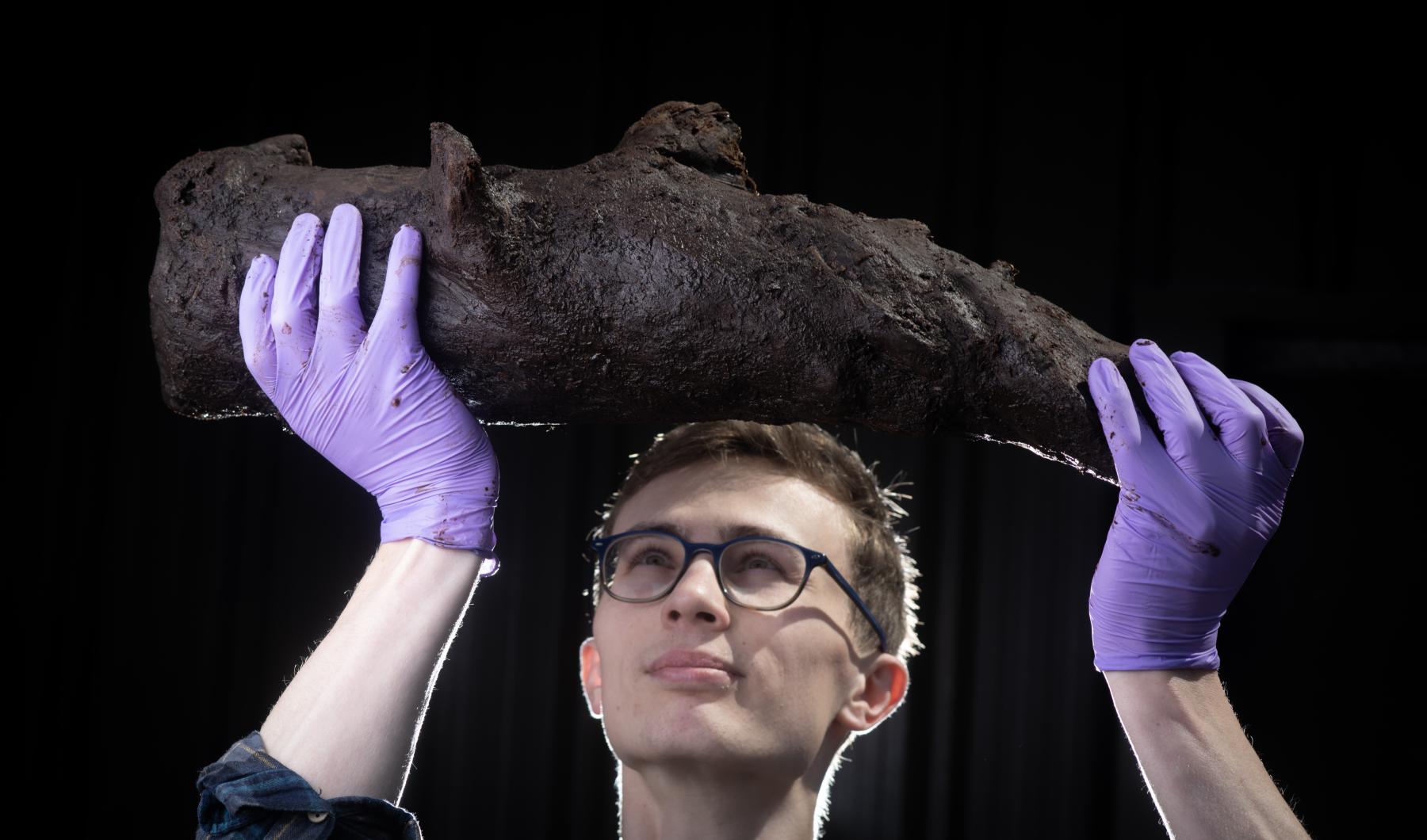
Material recovered from the site included pottery, glass, clay pipes, leather shoes, bottles, shells and household objects such as ink pots and chamber pots. Large quantities of mussel shells in a drain may reflect the sale of mussels collected from local waterways as street food, although this remains an interpretation.
Dumped material used to stabilise the river edge included pottery and glass-production waste dated to 1730–1790. Wessex Archaeology said further specialist research into the remains is continuing.