
Archaeology.Today
Field Report

Textile Fragments Survive in Eighth-Century Woman’s Tomb at Skonager

Researchers have recovered rare textile fragments from an eighth-century tomb at the Skonager site in western Jutland. The fabric survived on two scoop brooches, while planned textile and dental analyses may reveal details about the woman’s clothing, health, diet, and movements.

September 1, 2026
1 Source
Skonager
Textile Fragments Survive in Eighth-Century Woman’s Tomb at Skonager
The Story

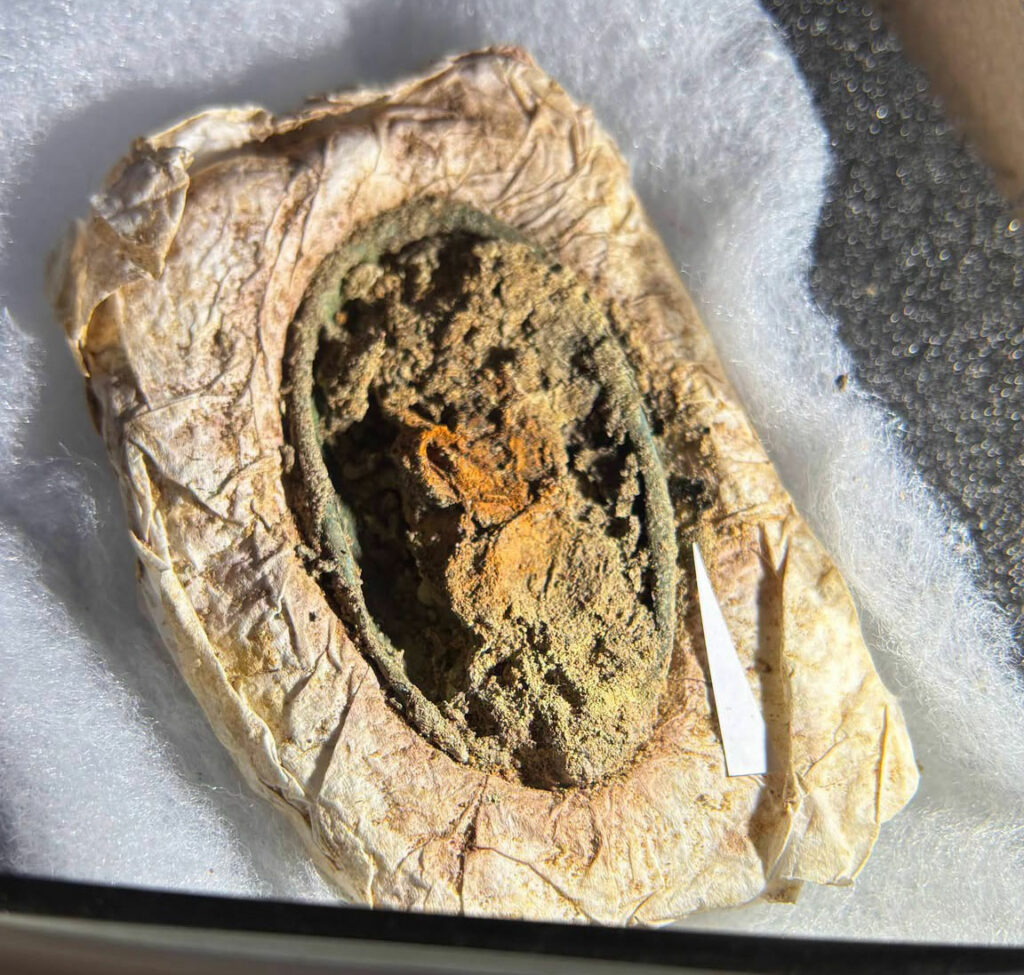
Rare textile fragments have been discovered in the eighth-century tomb of a woman at the Skonager site in western Jutland, Denmark, according to Archaeology Magazine. The surviving fabric was found attached to the front and back of two scoop brooches, metal fasteners recognized by their concave shape.

Researchers from the Vejle Conservation Center believe metallic salts released by the brooches may have helped preserve the textile. These compounds are thought to have inhibited the microbes that would otherwise have destroyed the fibers, making the fragments an unusual survival from the burial.

One of the brooches had been repaired. Researchers say this repair could indicate that the object was a family heirloom, although the fragment’s presence does not by itself establish how the brooch was used or passed down.

Ancient textile expert Lise Ræder Knudsen is analyzing the remaining fabric. The work could provide information about the weaving techniques, patterns, colors, and spinning quality of the woman’s clothing. It may also help distinguish between material from an outer garment and fabric from an inner layer worn next to the skin.

The burial will also be studied through the woman’s teeth. Researchers from the University of Southern Denmark plan to analyze them for evidence that could contribute to estimates of her age and information about her health status and diet. The analysis may also address whether she moved between regions during her life and whether she experienced physical stress during childhood or adolescence.

The textile fragments and the planned dental research offer separate lines of evidence about the woman and her burial. While the condition of the fabric has preserved only small scraps, those remains may still reveal aspects of clothing production and dress that are rarely available from archaeological burials.

Reference Desk

Sources & Further Reading

Continue Exploring

Related Archaeology

More stories
Fragments Reveal Previously Unknown Fourth-Century Roman Law Book
01
Artifacts
Score 40

Fragments Reveal Previously Unknown Fourth-Century Roman Law Book

A University of Cincinnati scholar and the Penn Museum have joined 50 animal-skin fragments into a double-sided page from a late-fourth-century Roman legal text. The Latin manuscript discusses taxation and public infrastructure but does not match any previously known imperial legal code.

Read story
Proteins Reveal Complex Paint Recipes in Ancient Egyptian Artworks
02
Ancient Civilizations
Score 40

Proteins Reveal Complex Paint Recipes in Ancient Egyptian Artworks

A study of 28 microscopic samples from 14 Egyptian artworks has identified animal glues from several species along with plant proteins linked to sesame and moringa. The findings suggest painters may have used seed-processing byproducts, offering new information for both ancient craft history and conservation.

Read story
Possible Etruscan Port Found Near Submerged Temple in Italy
03
Ancient Civilizations
Score 40

Possible Etruscan Port Found Near Submerged Temple in Italy

Divers surveying the seafloor near Punta della Vipera found carved limestone blocks arranged in an L-shaped double row. The structure, about 300 feet offshore, may have served as a landing place for visitors to a nearby Etruscan temple.

Read story
Study Examines Unusual 17th-Century Burial in Pień, Poland
04
Discoveries
Score 20

Study Examines Unusual 17th-Century Burial in Pień, Poland

A multidisciplinary study of Grave 75 at a cemetery in Pień examines the remains of a woman who died at about 17–19 years old. A sickle placed across her neck and a padlock fixed to her toe suggest measures intended to prevent the dead from returning, although researchers frame the burial within historical beliefs and social fears.

Read story
Medieval Manuscript Fragments Illuminate Guernsey’s Literary Past
05
Artifacts
Score 20

Medieval Manuscript Fragments Illuminate Guernsey’s Literary Past

Seventeen fragments reused in early modern administrative bindings provide the first substantial evidence of medieval books and reading on Guernsey. Six are written in French, including a rare passage from a dramatic Griselda poem that survives in only one other manuscript.

Read story
Historic Sulfur Emissions Linked to Porosity in Murujuga Rock Art
06
Discoveries
Score 20

Historic Sulfur Emissions Linked to Porosity in Murujuga Rock Art

A three-year monitoring program in Western Australia identifies historic sulfur dioxide emissions and resulting acid rain as the strongest explanation for increased porosity in rock surfaces near industrial areas of Murujuga. Researchers say current pollution has not been shown to accelerate deterioration, while further work will examine microbial and atmospheric factors.

Read story