
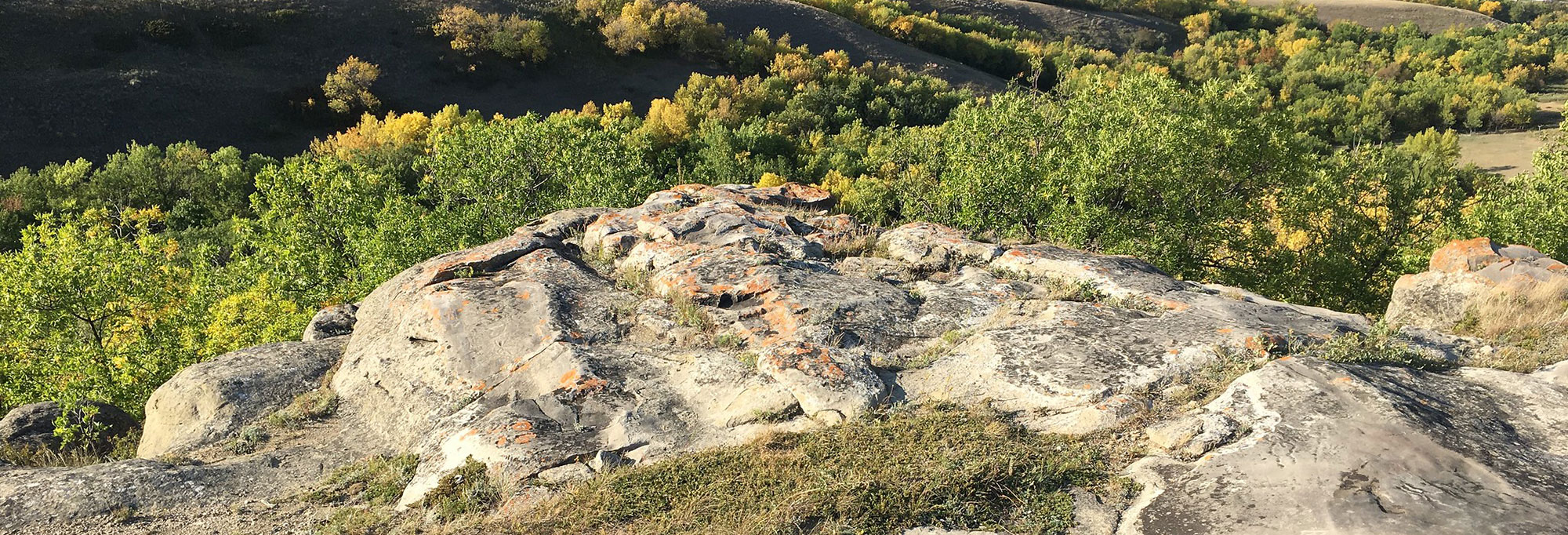
Two bone samples found beneath a sandstone cliff covered with petroglyphs at Saskatchewan’s St. Victor Petroglyph Site have produced new radiocarbon dates, including one that places human use of the location as far back as 120 B.C.
According to reporting cited by Archaeology Magazine, the samples came from separate pits beneath the cliff in southern Saskatchewan. One was dated to A.D. 900, while the other produced a date of 120 B.C.
The results do not establish when the petroglyphs themselves were carved. Archaeologist Tim Jones said, however, that they are suggestive of people using the site—and possibly making carvings there—as early as 2,100 years ago.
The site contains more than 360 carvings. Jones described it as an important part of Saskatchewan’s heritage and said the evidence suggests that First Nations people who moved through the region seasonally made the carvings.
The dates come from material found beneath the carved sandstone rather than from the carvings directly, so the relationship between the dated bones and individual petroglyphs remains uncertain. Researchers plan to analyze another bone recovered from a deeper layer of one of the pits, which could provide additional information about the site’s use.
Karin Steuber of the Saskatchewan Archaeological Society said the findings contribute to understanding the long history of occupation in Saskatchewan. The planned analysis may help researchers further assess how far back people used the location and how that use relates to the petroglyphs.
