Archaeology.Today
Field Report

Israeli Strikes Damage Archaeological Sites in Tyre Amid Evacuation Order

Israeli airstrikes in Tyre, Lebanon, killed eight people and damaged Roman ruins and other archaeological remains, according to The Guardian Archaeology. An evacuation order for the city’s historic Christian quarter prompted hundreds of residents to leave the area, which had previously been viewed as a safer zone.

September 8, 2026
1 Source
Tyre
Israeli Strikes Damage Archaeological Sites in Tyre Amid Evacuation Order
The Story

Israeli airstrikes in the Lebanese city of Tyre have damaged archaeological remains near the Roman hippodrome and at the al-Bass site, while an evacuation order displaced residents from the city’s historic Christian quarter, according to The Guardian Archaeology.

The strikes on Tuesday killed eight people and injured at least 32, the report said. Bombing hit the al-Masaken neighbourhood and other parts of Tyre, while additional attacks were reported in the nearby village of Abbasieh. Israeli forces subsequently ordered residents of Tyre’s Palestinian refugee camps and Christian quarter to evacuate, saying Hezbollah members had infiltrated the area and could launch attacks.

Hundreds of people left the Christian quarter in vehicles loaded with mattresses and belongings. The district had not previously been struck by Israel and had been regarded as a safer area within a city otherwise affected by bombardment. The report said many Shia Muslim residents had moved there seeking safety, while the Lebanese army was deployed in the area the previous week as displaced people arrived.

The archaeological damage occurred during an Israeli attack on Sunday near Tyre’s Roman hippodrome. Ali Badawi, a regional director of archaeological sites at Lebanon’s Ministry of Culture, told AFP that falling rubble damaged archaeological objects and architectural elements across a wide area. These included columns, capitals, column bases and mosaics.

Earlier strikes had also damaged Roman ruins and other archaeological sites at al-Bass, the report said. Lebanese authorities had placed Blue Shield emblems on heritage sites in Tyre in March. According to the report, the markings are intended to provide archaeological sites protection during armed conflict under the Hague Convention.

Tyre is described in the report as one of the world’s oldest cities and contains numerous archaeological sites, including a UNESCO World Heritage site. Christian religious leaders from three denominations appealed to the international community and the Lebanese state to prevent an attack on the old quarter, describing it as a historic and human centre inhabited by thousands of civilians.

The report also said that Beaufort Castle, described as nearly 1,000 years old, and other historic buildings in southern Lebanon had been damaged in recent months.

Reference Desk

Sources & Further Reading

Continue Exploring

Related Archaeology

More stories
Roman Villa with Mosaics and Pet Names Found at Adramytteion
01
Ancient Civilizations
Score 140

Roman Villa with Mosaics and Pet Names Found at Adramytteion

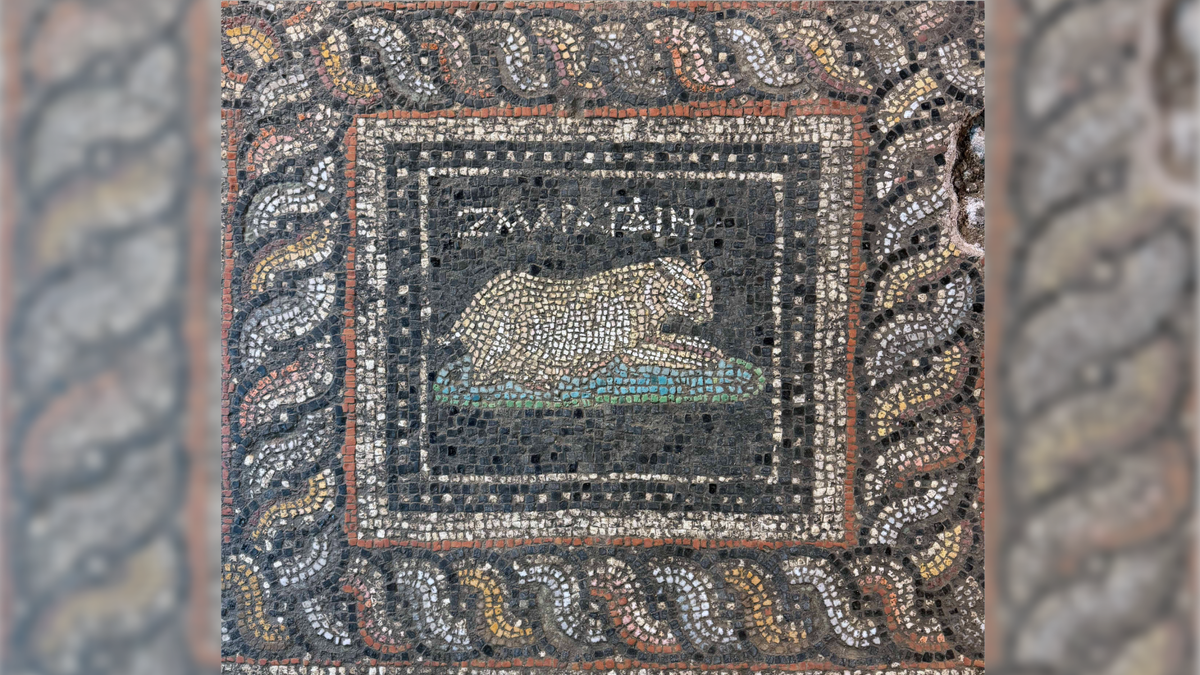
Excavations at the ancient city of Adramytteion in western Turkey have revealed a Roman residential complex with decorated halls, drainage infrastructure and mosaics depicting birds, fish, a winged horse, Medusa figures, pygmies, a cat and a dog. The residence appears to have been in use during the second century AD.

Read story
Roman Neuenstadt May Have Been Abandoned After Two Generations
02
Ancient Civilizations
Score 140

Roman Neuenstadt May Have Been Abandoned After Two Generations

Excavations at Neuenstadt am Kocher in southwestern Germany indicate that the planned Roman settlement may have lasted only several decades. Archaeologists are examining homes, commercial areas and a stone cellar for evidence about its residents and whether frontier instability contributed to its abandonment.

Read story
Roman Pottery Production Site at Arne to Feature on BBC Two
03
Artifacts
Score 140

Roman Pottery Production Site at Arne to Feature on BBC Two

Excavations at The Moors at Arne near Poole Harbour uncovered more than 17,000 pottery fragments, two kilns and building remains linked to large-scale production of Black Burnished ware. The findings will appear in an episode of Digging for Britain featuring experimental attempts to recreate the pottery and its firing process.

Read story
Roman Villa Mosaic at Adramytteion Depicts Named Cat and Dog
04
Artifacts
Score 140

Roman Villa Mosaic at Adramytteion Depicts Named Cat and Dog

Archaeologists excavating the ancient city of Adramytteion in Turkey uncovered a multicolored Roman mosaic featuring 15 panels of animals and mythological figures. Two animals are labeled in Greek as Emerald, a seated cat, and Ocean, a running or leaping dog.

Read story
Ramesses II Inscription Raises Possibility of Egypt’s Mesn at Tell Abu Saifi
05
Artifacts
Score 120

Ramesses II Inscription Raises Possibility of Egypt’s Mesn at Tell Abu Saifi

A sandstone lintel found at Tell Abu Saifi in Egypt’s northern Sinai bears the name and titles of Ramesses II and mentions Horus, Lord of the City of Mesn. The reference may link the site to the ancient settlement, but archaeologists say further excavation is needed.

Read story
Villa Complex and 84-Square-Metre Mosaic Found in Eastern Türkiye
06
Excavations
Score 85

Villa Complex and 84-Square-Metre Mosaic Found in Eastern Türkiye

A farmer’s discovery of mosaic remains in Salkaya village led to excavations revealing a settlement with a villa, bathhouse, church, grain-storage area and child’s grave. Archaeologists date the complex to the Late Roman and Early Byzantine periods, but its original owner remains unknown.

Read story