Archaeology.Today
Field Report

Excavation Examines Medieval Choir at Bergen’s Nonneseter Monastery

Archaeologists from Norway’s cultural heritage institute are investigating the former choir of Bergen’s Nonneseter Monastery, where additional medieval graves and artefacts may survive. The work is linked to redevelopment around the Nonneseter light rail stop and could add to evidence about life within the Benedictine community.

September 8, 2026
1 Source
Nonneseter Monastery
Excavation Examines Medieval Choir at Bergen’s Nonneseter Monastery
The Story

Archaeologists are excavating the former choir of the medieval church at Nonneseter Monastery in Bergen, Norway, seeking evidence of burials and daily life at one of the city’s oldest religious sites. The investigation is taking place alongside plans to create a new public space around the Nonneseter light rail stop.

The work is being conducted by the Norwegian Institute for Cultural Heritage Research (NIKU) as Bergen Municipality and Vestland County Council redevelop the surrounding area for public transport, pedestrians and cyclists. The project also aims to make the monastery’s surviving remains more visible and to mark the positions of the former church interior and monastery garden.

Nonneseter was probably established during the first half of the 12th century as a Benedictine convent. Most of its medieval buildings have disappeared beneath later development. Above ground, the principal surviving remains are the tower base at the western end of the former church and the Korkapellet, or choir chapel, to the east. NIKU says the redevelopment will provide the first clear view of the two structures in relation to each other in more than a century.

The current excavation lies within the church’s expanded choir and extends toward the surviving choir chapel. An excavation conducted by NIKU in 2006, during construction of Bergen’s first light rail route, uncovered church foundations and about 30 graves dating to the period when the monastery was active. Some burials were located beneath the former choir floor.

Because burial inside a medieval church was generally limited to relatively few people, archaeologists are particularly interested in whether more graves remain in this part of the site. The choir was considered an especially prestigious burial location because of its religious importance. Possible occupants could have included clergy, royalty and wealthy benefactors, but the current investigation has not established who may be buried there.

Earlier work has also recovered decorated floor tiles, including one with a fleur-de-lis design, along with coins, gaming pieces, writing styluses, needles, spindle whorls and thimbles. These finds offer evidence of activities such as textile production, writing, recreation and commerce, and researchers hope the new excavation will provide further information about the women of the Benedictine community and those who interacted with it.

Among the latest finds is a miniature iron toy believed to be considerably younger than the monastery. NIKU researchers say it likely dates to a later period when children lived or played around the former religious site, illustrating that the area continued to be used across successive generations.

Reference Desk

Sources & Further Reading

Continue Exploring

Related Archaeology

More stories
Bronze-Casting Mould and Weapons Found at Tatarstan Pyanobor Site
01
Excavations
Score 40

Bronze-Casting Mould and Weapons Found at Tatarstan Pyanobor Site

Excavations at the Kipchak Archaeological Complex in Russia’s Tatarstan have yielded a bronze-casting mould, bronze and iron arrowheads, a spearhead, jewellery and decorated pottery. Kazan Federal University archaeologists say the finds may help investigate the debated origins of the Pyanobor culture.

Read story
Villa Complex and 84-Square-Metre Mosaic Found in Eastern Türkiye
02
Excavations
Score 40

Villa Complex and 84-Square-Metre Mosaic Found in Eastern Türkiye

A farmer’s discovery of mosaic remains in Salkaya village led to excavations revealing a settlement with a villa, bathhouse, church, grain-storage area and child’s grave. Archaeologists date the complex to the Late Roman and Early Byzantine periods, but its original owner remains unknown.

Read story
4,000-Year-Old Geometric Tablet Found at Lake Garda Settlement
03
Excavations
Score 40

4,000-Year-Old Geometric Tablet Found at Lake Garda Settlement

Archaeologists excavating the Early Bronze Age settlement of Lucone D near Italy’s Lake Garda have recovered a clay tablet marked with geometric designs. It is the 21st enigmatic tablet found across the wider Lucone site, but the purpose and meaning of the markings remain unknown.

Read story
Excavations Recast the Date of Galich’s Lost Lower Fortress
04
Archaeological Science
Score 40

Excavations Recast the Date of Galich’s Lost Lower Fortress

LiDAR mapping and 2026 excavations at Galich’s Lower Settlement found defensive earthworks and artifacts mainly dating to the 14th and 15th centuries. The evidence challenges its traditional identification as a 12th-century fortress and points instead to construction around the mid-15th century, possibly amid a dynastic conflict.

Read story
Ancient Sardis Added to UNESCO World Heritage List After Decades of Excavation
05
Heritage
Score 40

Ancient Sardis Added to UNESCO World Heritage List After Decades of Excavation

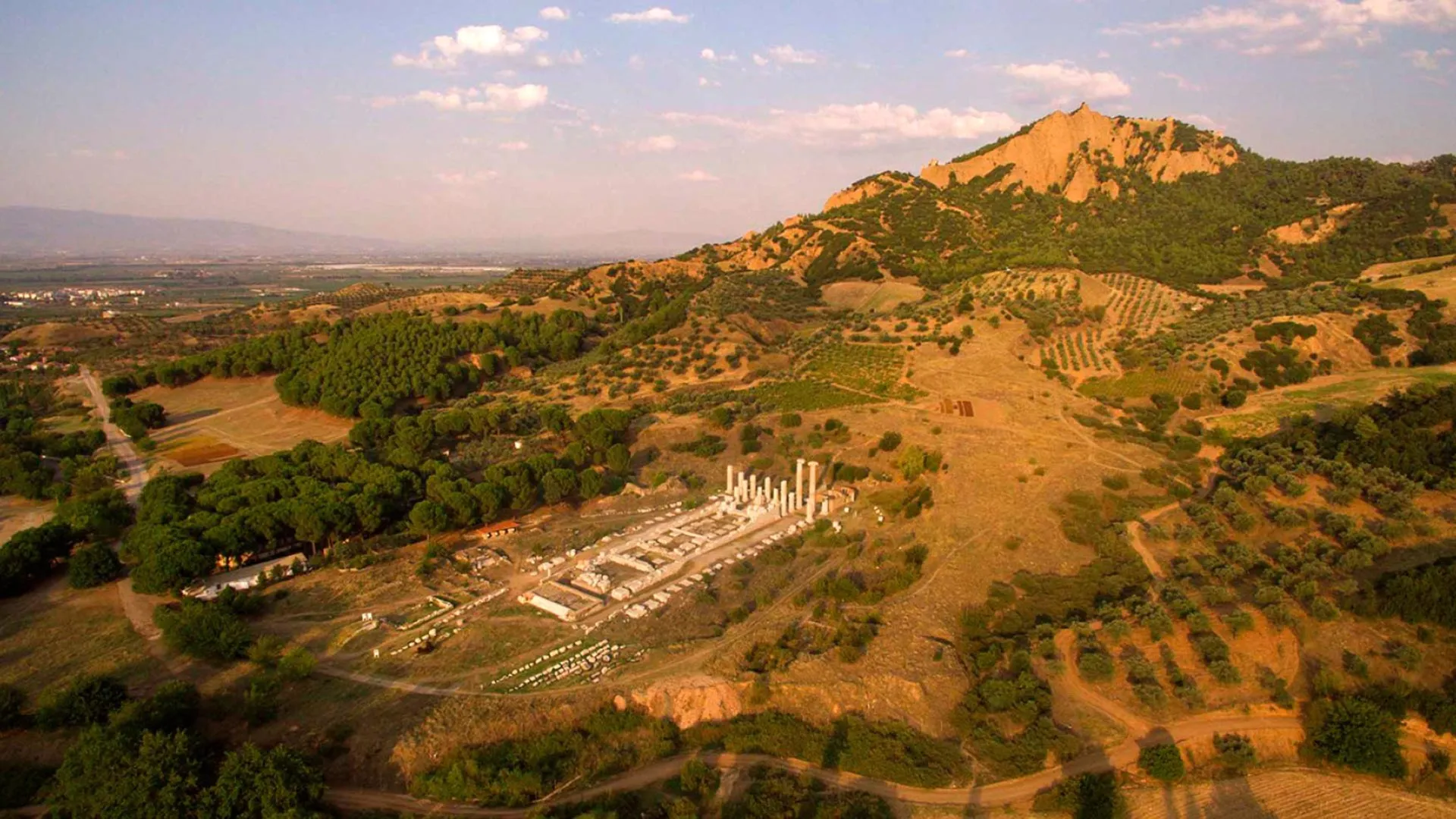
Sardis, an ancient city in western Turkey excavated continuously since 1958, has been added to the UNESCO World Heritage List. Researchers say the designation recognizes decades of archaeological work while highlighting the need to protect the site from erosion, farming damage and looting.

Read story
Excavations Reveal Early Christian Church Features at Tokod Fortress
06
Excavations
Score 40

Excavations Reveal Early Christian Church Features at Tokod Fortress

Archaeologists working at Hungary’s Tokod-Várberek site have uncovered a ciborium foundation, painted fresco fragments and a group of metal artefacts. The finds are helping clarify the layout and development of an early Christian church within the late Roman fortress.

Read story