
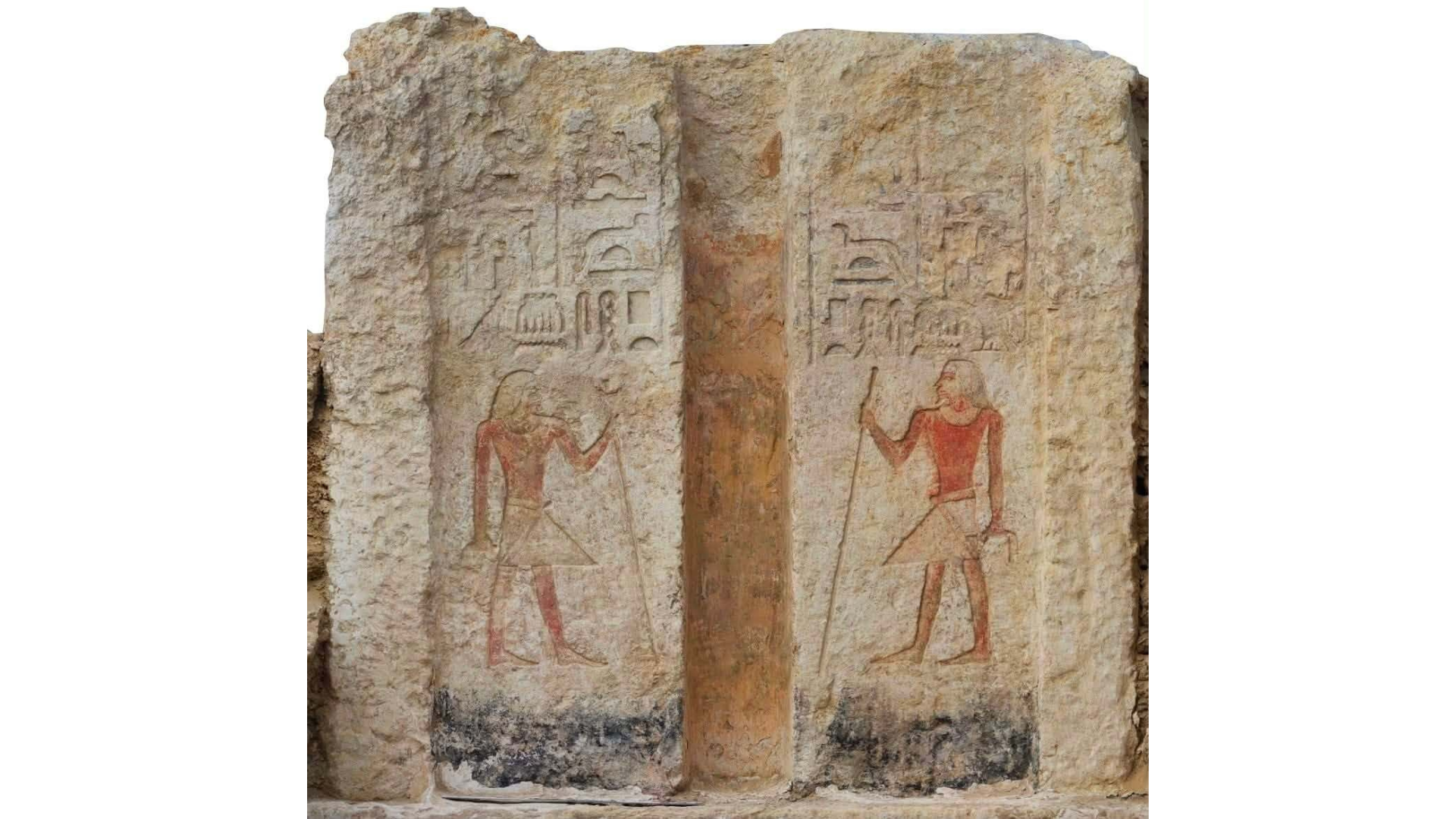
Archaeologists in Egypt have discovered a decorated tomb at Saqqara belonging to Sekhentio-Ptah, an official who served during the Old Kingdom, dated in the source material to 2649–2150 B.C. The excavation team announced the find in the Bubasteion area of the necropolis.
Inscriptions and the tomb’s contents identify Sekhentio-Ptah as the “keeper of the secrets of royal decrees.” He also held the titles “Overseer of all the King’s Works” and “Overseer of Royal Documents,” according to a translated statement from Egypt’s Ministry of Tourism and Antiquities.
Ann Macy Roth, a clinical professor of Egyptology at New York University who was not involved in the excavation, said the title probably referred to an administrative role involving royal documents and the people who produced them. She described it as a title associated with royal scribes rather than evidence of a mysterious position.
The burial included an offering table, a purification basin and two false doors. These symbolic doors were placed in tombs in the belief that the deceased’s soul could pass through them. Based on the design of the false doors, Roth said the tomb likely dates to the late Fifth or early Sixth Dynasty, approximately 4,350 years ago.
More than 100 shabtis were also recovered. Ancient Egyptians believed these figurines would serve the deceased in the afterlife. The archaeologists additionally found a wooden falcon statue, which may be connected to the falcon-headed god Horus, along with fragments of cartonnage, a plastered material used in mummy coverings.
Sekhentio-Ptah’s mummy was not found or identified. Roth said photographs and information released by the ministry suggest that the tomb may have been reused for later burials, a possibility that could explain the presence of the shabtis and cartonnage. She said those objects likely belonged to later occupants rather than to the original burial.
The Bubasteion area was used for cat burials during later periods, including the Late Period, dated in the source material to about 664–332 B.C. The area was associated with Bastet, a cat-shaped goddess linked with fertility and protection. The ministry’s announcement did not report cat burials inside this particular tomb.


